I recently encountered afresh a familiar step which is one of the many pas composés within the vocabulary of baroque dance which has no name of its own. It has attracted some fanciful names, but I know it as the ‘jetté-step’ or ‘jetté-pas simple’. I have always thought of it as a proto-cabriole and wondered for a long time about its relationship to the demie cabriole which is seen as a stage step solely for men. I thought about writing a post about it and then discovered that I had already looked at this step in some detail way back in 2019-2020 – I list the relevant posts at the end of this one. There is one area within the surviving repertoire of notated dances for the stage that I didn’t really explore then – the duets for a man and a woman within the three published collections – sources are listed at the end. These raise further questions in the debate over the differences between male and female stage dance step vocabularies.
In my blog ‘Stage Dances for Women and the Demie Cabriole’ I began as follows. This is how it [the jetté-pas simple] is notated in the ‘Entrée pour une femme Dancée par Mlle Victoire au Ballet du Carnaval de Venise’, a forlane included in the 1704 collection of Pecour’s ‘Entrées de Ballet’:
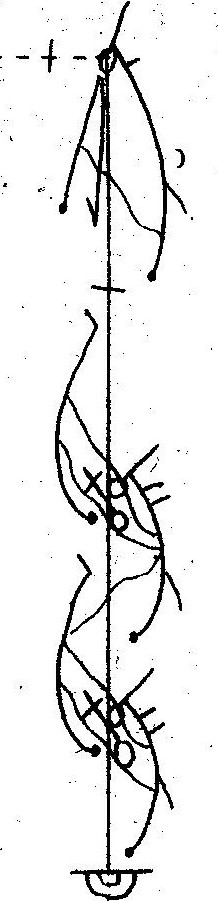
Pecour, Recueil de dances (Paris, 1704), p. 7
The first element of the step is the same as Feuillet’s jetté ‘en avant et le second emböetté derriere’.
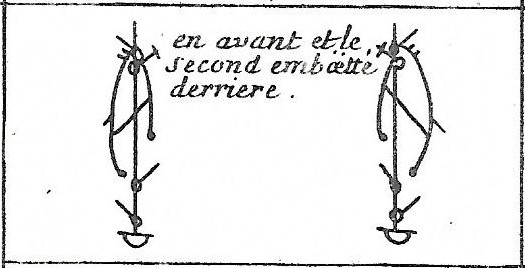
Feuillet, Choregraphie (Paris, 1701), pl. 72 (detail)
This particular jetté is the basis for Feuillet’s ‘demie cabriole en avant’, which he also calls a ‘jetté battu’.
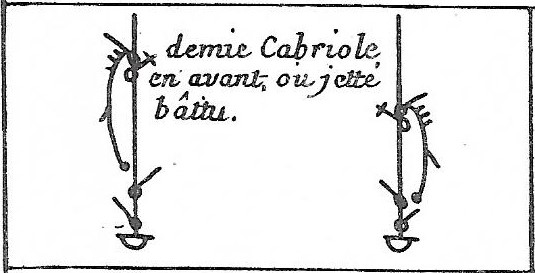
Feuillet, Choregraphie (Paris, 1701), pl. 84 (detail)
In the women’s dances, it is notated as a jetté, without the third line that denotes the cabriole movement, the beating together of the legs in the air.
The ‘jetté-pas simple’ itself does not appear in Feuillet’s tables, so we do not know how he might have named or described it.
There is no sign of the ‘jetté-pas simple’ in the duets within Feuillet’s collection of his own dances, published alongside Choregraphie in 1700, but it does appear in four of the fifteen duets for a man and a woman in Feuillet’s 1704 collection of Pecour’s stage dances. The first is the ‘2e Entrée de Persée’ danced by Ballon and Mlle Subligny in Lully’s tragédie en musique Persée, perhaps in the 1703 revival (detailed references to the individual notations are given at the end of the post). This dance is a bourrée with the time signature 2 and the step appears only once, within the final B section near the end of the choreography.
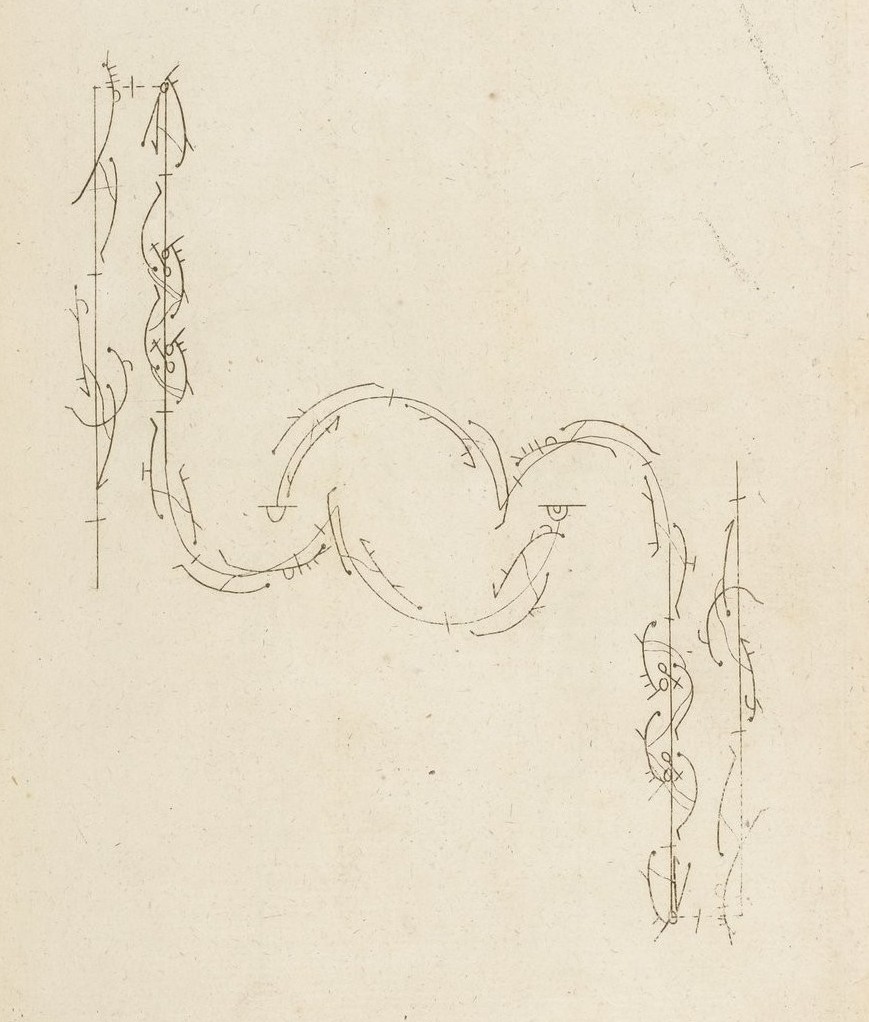
As you can see, the dancers are travelling away from each other – Ballon is moving upstage, while Mlle Subligny travels downstage. They are probably closer together (across the stage) than appears in the notation. The sequence is preceded by a coupé soutenue and followed by a coupé battu.
The ‘jetté- pas simple’ also turns up in the next dance within the 1704 collection, the ‘Entrée à deux’ from Campra’s Hésione danced by Dumirail and Mlle Victoire probably in 1700. This is a ‘gigue lente’, a loure, in 6/4 which has two pas composés to each bar. The ‘jetté-pas simple’ sequence falls within the second A section of the dance, preceded by a coupé battu (with two beats, which ends the previous bar) and followed by another coupé battu (which completes the bar).
The dancers are travelling away from each other on curved tracts before coming to face each other across the dancing space.
The third example is again performed by Ballon and Mlle Subligny in the ‘Entrée à deux’ from Campra’s Arethuse of 1701. This duet is a rondeau in 2 and the ‘jetté-pas simple’ comes in the final A section, just a few steps before the end of the dance. It is preceded by a pas de bourrée emboîté and the two dancers travel on a diametric line towards each other before meeting with a coupé battu which has a quarter turn so both face downstage.
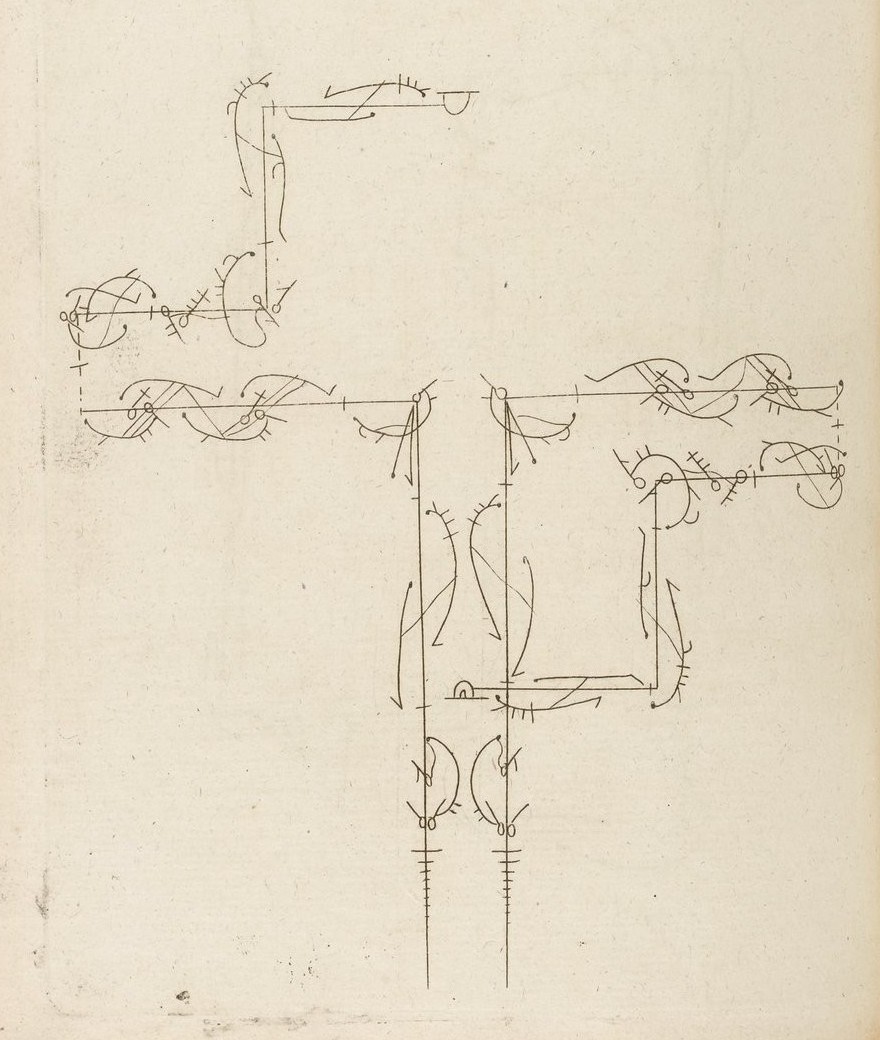
The burst of energy in the ‘jetté-pas simple’ combination is followed by the more measured dynamic of a contretemps backwards and a final pas assemblé.
The last male-female duet in the 1704 collection to include this step is the ‘2e Entrée’ danced by Dumoulin and Mlle Danjeville in Rebel’s Ulisse of 1703. This is another bourrée in 2 and the ‘jetté-pas simple’ combination occurs twice. The first time comes in the second A section, where it is preceded by a saut avec ouverture de jambe with a half-turn and followed by a coupé soutenu. The dancers travel towards one another across the space.
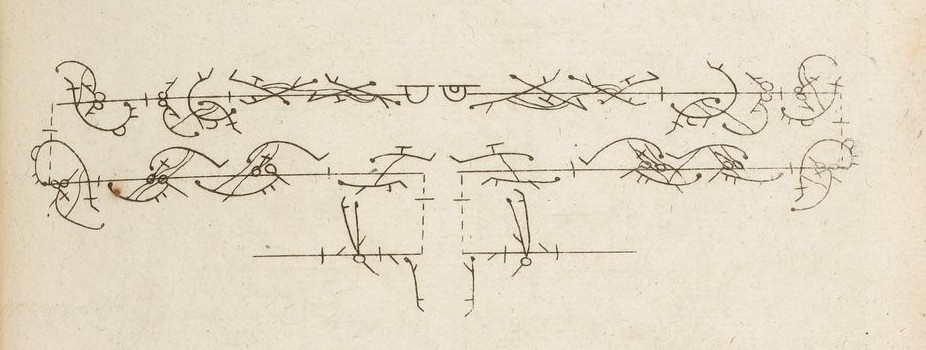
The second appearance of the step is in the first B’ section (the musical structure of this dance is AABB’BB’, A=8 B=10 B’=4). It begins the musical section, preceded at the end of the first B section by a pas de bourrée emboîté and followed – as in so many of the examples I have looked at – by a coupé battu. Dumoulin and Mlle Danjeville once more travel towards one another across the stage.
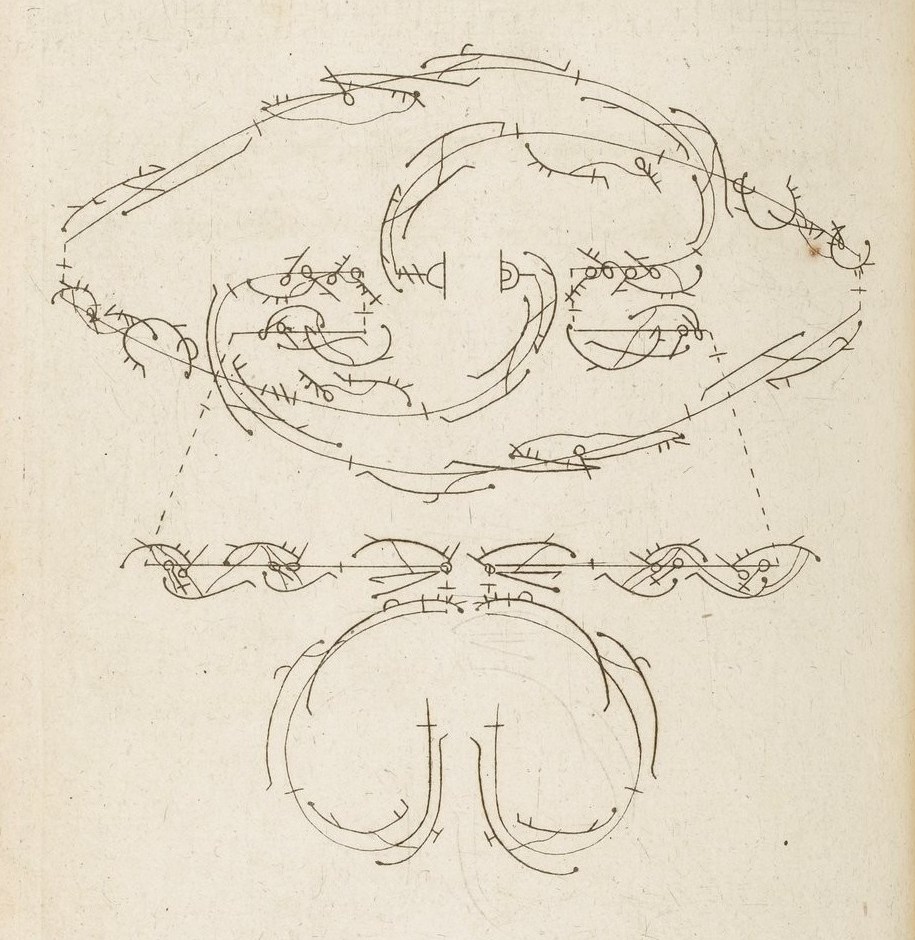
It is difficult to draw any conclusions about Pecour’s use of the ‘jetté-pas simple’ from these examples, except that the regular use of a following coupé battu points to a motif favoured by him, although he is not tied to a particular floor pattern for the sequence of steps. In all of these notations there is no sign for a cabriole on the man’s side.
Gaudrau’s Nouveau recüeil de dance de bal et celle de ballet, published around 1713, has twelve of Pecour’s duets for a man and a woman among the stage dances that form the second part of this collection. Only one of them includes the ‘jetté-pas simple’, the ‘Gigue à deux’ danced by David Dumoulin and Mlle Guyot in La Coste’s Philomèle of 1705, perhaps when the opera was revived in 1709. It occurs twice in the choreography, beginning the dance with the two dancers travelling downstage side-by-side and followed by a step which seems to conflate the ‘jetté-pas simple’ with a jetté-chassé.
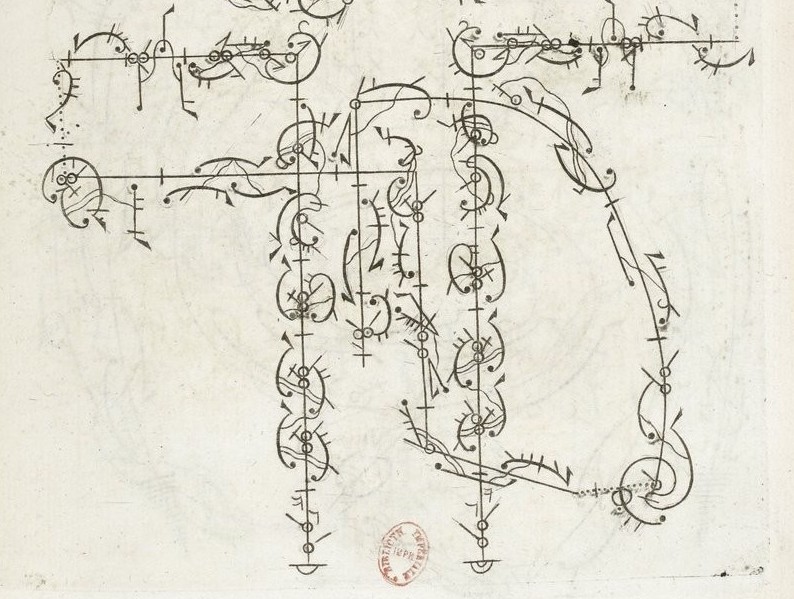
The second sequence is within the second B section, preceded by a pas assemblé and followed by a coupé battu, with the dancers again travelling downstage side-by-side.
This dance is a lively gigue in 6/4, which perhaps encouraged Pecour to make repeated use of the step. The characters are Bergers, as they are in the ‘2e Entrée’ from Ulisse, although there is little indication in other dances that the ‘jetté-pas simple’ was associated with particular characters.
In all these duets the ‘jetté-pas simple’ is the same for both the man and the woman. There is no sign of the demie cabriole for the man. So, should we assume that in such dances both steered clear of cabriole beats? Another question occurs to me – was this step was intended to travel or did it focus on the upward motion of the jetté, or, more likely, did that depend on the choreographic context within which it was used?
I will save Anthony L’Abbé’s use of the step within his duets for a man and a woman in A New Collection of Dances of a few years later for a separate post, as his approach to the ‘jetté-pas simple’ is rather different. Kellom Tomlinson also used it in his choreographies for the stage, recorded in manuscript in his Work Book and again, I will save these for another post.
Sources:
Recüeil de dances contenant un tres grand nombres des meillieures entrées de ballet de Monsieur Pecour (Paris: Feuillet, 1704)
- 2e Entrée de Persée Dancée par les mêmes [Ballon and Mlle Subligny], pp. 97-108 (p. 107)
- Entrée à deux dancée par mr. Dumirail et Mlle Victoire à l’opera d’Hésionne, pp. 109-116 (p. 110)
- Entrée à deux dancée par mr Balon et Mlle Subligny à l’Opera d’Aretuse, pp. 122-126 (p. 126)
- ‘2e Entrée’ dancée par les mêmes [un berger et une bergère, Dumoulin and Mlle Danjeville, Ulisse], pp. 144-147 (pp. 145, 146)
Nouveau recüeil de dance de bal et celle de ballet contenant un tres grand nombres des meillieures entrées de ballet de la composition de Mr. Pecour (Paris: Gaudrau, [1713])
- Gigue à deux dancée par Mr. D. Dumoulin and Mlle Guiot a Philomelle, pp. 15-16 (pp. 15, 16)
Earlier Blog Posts;
Stage dances for Women and the Demie Cabriole
Demie Cabrioles in Male Solos and Duets
Pas Battus in L’Abbé’s Stage Duets for a Man and a Woman
The ‘Passagalia of Venüs & Adonis’ and Professional Female Dancing