Tag Archives: Baroque Dance

Pas de Sissonne Battu in Stage Dances for Women

The pas de sissonne battu, shown in Feuillet’s ‘Table des Pas de Sissonne’ turns up in several of the notated stage solos and duets for women. I am not going to attempt any detailed analysis in this post, I will simply point out where the step occurs.

It can be found in two of the choreographies in the 1704 collection of Pecour’s ‘Entrées de Ballet’: the ‘Passacaille pour une femme’ performed by Mlle Subligny in Gatti’s Scylla; and the ‘Entrée Espagnolle pour une femme’ danced by her in Campra’s L’Europe galante.

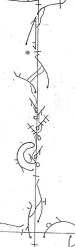
It is notated twice in the passacaille, first in bar 96 (plate 28), when it is not (strictly speaking) a pas de sissonne since the assemblé battu is followed by a changement, and the dance bar concludes with a coupé simple.
Passacaille Scylla 28 (2)

It is danced again in bar 152 (plate 31). In both cases, the step is preceded by a coupé soutenue and followed by a coupé battu avec ouverture de jambe.

In the ‘Entrée Espagnolle’ it comes in the penultimate bar of the dance, bar 29 (plate 40) – the loure is notated with two pas composés to each bar of the music. The pas de sissonne is preceded by a contretemps and has an ouverture de jambe on the concluding spring. The assemblé battu is performed with a half turn in the air.

Entree Espagnolle 40 (2)

In Pecour’s Nouveau recüeil of around 1713, the pas de sissonne battu turns up in four of the female solos and just one of the duets. The ‘Gigue pour une femme’ danced to music from Louis Lully’s and Marais’s Alcide is a highly embellished choreography. The unnamed danseuse has a wealth of steps incorporating pas battus, although only one is a pas de sissonne battu. It comes early in the dance, bar 11 (plate 69) and concludes with a changement. It is preceded by two unusual pas composés incorporating tortillé movements (only one is shown here) and followed by a pas de bourée.

Gigue Alcide 69 (2)

I have often wondered whether the anonymous female soloist was, in fact, Mlle Guyot who is the female star in this collection.

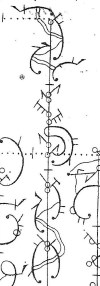
Mlle Guyot is named as the performer of the ‘Gigue pour une femme’ from Campra’s Tancrède. This lively little number has a pas de sissonne battu in bar 32 (plate 76), although again it has a concluding changement rather than a spring onto one foot. It is followed by a coupé simple and a coupé avec ouverture de jambe, recalling the sequence in the passacaille from Scylla.
Gigue Tancrede 76 (2)

The ‘Entrée pour une femme seul’, a gavotte from Lully’s Atys, also danced by Mlle Guyot, has a pas de sissonne battu in bar 22 (plate 78). It, too, has a changement instead of a spring and is followed by a pas de bourée battu.

Gavotte Atys 78 (2)

The choreographic masterpiece in this collection, so far as the dances for women are concerned, is the ‘Passacaille pour une femme dancée par Mlle. Subligny en Angleterre’, presumably during her visit to London in the winter of 1701-1702. The music is from Lully’s opera Armide.

Mlle Subligny performs two assemblés battus during the solo. The first comes in bar 101 (plate 84) as a new variation begins in the music. It is followed by a changement and a coupé simple.

Passacaille Armide 84 (2)

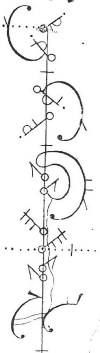
The second is in bar 147 (plate 86), as the solo draws to its conclusion, and is the step just before she begins her final retreat. Again, it is followed by a changement and a coupé simple.
Passacaille Armide 86 (2)

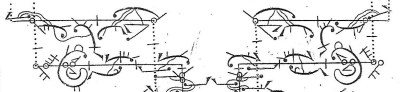
The collection of c1713 is notable for the five duets performed by Mlle Guyot and Mlle Prévost. These characterful choreographies are full of pas sautés, although only the ‘Canarÿe dancée … au triomphe de l’amour’ includes a pas de sissonne battu (bar 8, plate 43). This example has a half-turn in the air and is preceded by a contretemps and followed by a pas de bourée.
Canarye Guyot Prevost 43 (2)

In L’Abbé’s New Collection of Dances, published around 1725, neither of Mrs Santlow’s solos include a pas de sissonne battu. However, the ‘Passagalia of Venüs & Adonis’ is an astounding choreography, so far as our ideas of the conventions of female dance technique are concerned. I have performed it numerous times and written about in several different contexts. I hope to return to it later.

L’Abbé’s ‘Passacaille of Armide’ danced by Mrs Elford and Mrs Santlow has one assemblé battu in bar 101 (plate 13). It draws attention to itself not only because it marks the transition to a new musical variation but also because it is followed by two beats in which the dancers come to a dynamic stop – a moment of stillness in which energy continues to flow through their bodies as they wait to resume their dance.
Passacaille Armide Duet 13 (2)

I suggest that, given the number of examples in these collections, the assemblé battu, within the pas de sissonne battu (which is often in a variant concluding with a changement) or alone, was a step integral to the vocabulary of early 18th-century professional female dancers. If they regularly performed this step, what other jumped pas battus might they have performed? There are some hints in the notated female solos and duets and also in the male-female duets as well as the dances for men.

Stage Dances for Women and Feuillet’s Pas Battus

I have long been sceptical about the claim that Mlle Camargo was the first woman to perform an entrechat-quatre on stage, not least because I know that several of the earlier notated stage dances for women contain pas battus not so far removed from that feat. I thought it was time I looked more closely at the vocabulary in those dances, focussing on batterie in the jumped steps rather than the percussive pas battus used to embellish so many of the walking steps in choreographies created for the stage.

I listed the four principal sources for notated stage dances in an earlier post. Between them these collections contain 16 female solos and 7 female duets. The publication dates range over some 25 years, more than a generation of dancers, although the choreographies themselves may range from the 1690s to the 1720s. We don’t know how these notations relate to what was actually performed onstage and there is no consensus about the purposes behind their publication. Were they intended to record the choreographies performed by leading dancers, for dancing masters working in the theatre or even for fans? Were they actually simplified versions of the original dances intended for the teaching of talented (but not necessarily professional) pupils? Whatever the truth, they provide invaluable evidence of the dancing we have lost. They are well worth detailed exploration.

In Choregraphie, Feuillet provides tables for ‘Cabrioles, et demi Cabrioles’ as well as ‘Entre-chats et demy entre-chats’.

In addition, he includes aerial pas battus in his tables of ‘Contre-temps; and ‘Pas de sissonne’.

I should point out that there are differing interpretations of Pierre Rameau’s description of the contretemps in chapter 37 of Le Maître a danser. He uses the phrase ‘se relever en sautant dessus’, which has led some scholar-practitioners to adopt a relevé rather than a sauté. The former means that it is not, technically, a jumped step.

Feuillet was himself the notator of the 1700 collection of his own choreographies, as well as the 1704 collection of Pecour’s ‘Entrées de Ballet’. Both Gaudrau, who notated the Pecour collection of around 1713, and Le Roussau, who notated L’Abbé’s New Collection, used the system published by Feuillet in Choregraphie. Which, if any, of these pas battus appear in the notated dances for professional female dancers recorded in these collections?

Love’s Mistress

One of the most interesting productions of the Restoration period, so far as stage dancing is concerned, is Thomas Shadwell’s Psyche, first given with music by Matthew Locke at the Dorset Garden Theatre on 27 February 1675. I have written elsewhere about the piece and St André’s choreography for it. Shadwell drew heavily on Lully’s tragédie-ballet Pysché with its text by Molière, Quinault and others, given an exceptionally lavish production at the French court in 1671.

The London Psyche also has an English antecedent – Thomas Heywood’s Psyche; or Love’s Mistress (often titled Love’s Mistress; or, The Queen’s Mask) which was performed several times during the 1660s. Heywood’s play dates back to the 1630s and was one of the post-Restoration revivals from the pre-Civil War theatre. Samuel Pepys saw it on a number of occasions, the last he recorded was at the Bridges Street Theatre on 15 August 1668 when he wrote ‘the thing pretty good, but full of variety of divertisement’, indicating that the production included dancing.

The 1669 revival of Love’s Mistress was attended by two foreign visitors, both accompanying the Grand Duke of Tuscany, Cosimo de’ Medici. The account of the play by Lorenzo Magalotti is readily accessible, for it is printed in part one of The London Stage as commentary on the performance at Bridges Street on 24 May 1669.

‘To the story of Psyche, the daughter of Apollo, which abounded with beautiful incidents, all of them adapted to the performers and calculated to express the force of love, was joined a well-arranged ballet, regulated by the sound of various instruments, with new and fanciful dances after the English manner, in which different actions were counterfeited, the performers passing gracefully from one to another, so as to render intelligible, by their movements, the acts they were representing.’

Also with the Grand Duke at that performance was Filippo Corsini, whose account is less well-known, although it was published (in the original Italian as well as an English translation) in Theatre Notebook back in 1980. Corsini described Love’s Mistress as an ‘opera’.

‘It dramatized the marriage of Psyche and was full of scene changes and dances, among them one of the 10 Cyclops and another of the 16 Gods. The play was very stylish to look at, which was all we could enjoy, not understanding the language.’

Both commentators reveal the sophistication of English stage entertainments within ten years of the Restoration. Magalotti, apparently, recognises a specifically ‘English’ style of dancing which seems to have been based on expressive actions.

Heywood’s Love’s Mistress was printed a number of times, first in 1639 with a further edition in 1640, another in the early 1660s (dated ‘1640’ on the title page) and yet another as late as 1792 (which claimed to reprint one of the ‘1640’ editions). I haven’t done a careful comparison of these, but a rapid check of the real 1640 edition against that of 1792 (both of which are accessible digitally) shows that they include the same dances.

In act 1, there is a series of dances each of which is followed by the entrance of a different character, first a ‘Proud Ass with Ears’, then a ‘Prodigal Ass’, followed by a ‘Drunken Ass’, a ‘Usurer’, a ‘Young Gentleman’ and an ‘Ignorant Ass’. The scene ends with a dance before the characters exit.  I will not try to analyse these dances, except to point out that the story of Cupid and Psyche comes from The Golden Ass by Apuleius and that Heywood uses Apuleius and Midas as onstage commentators. Midas, of course, was provided with ass’s ears for judging against Apollo in a musical contest.

In act 2, there is a dance by ‘Pan, Clown, Swains and Country Wenches’. All are characters associated with the countryside and rusticity. Pan was the god of shepherds. In the 17th and 18th centuries a ‘Clown’ was an unsophisticated countryman, while swains and country wenches were the common countryfolk, not the refined shepherds and shepherdesses of the pastoral tradition.  This dance would undoubtedly have been lively and based around the steps and figures of popular dancing.

In act 3, another dance is performed by ‘a King and a Beggar, a Young Man and an Old Man [in the 1792 edition an old woman], a Lean Man, a Fat Woman’. This must have been a comic dance as it presented a series of contrasts in status, age and physique. It could well have been based on actions as much as dance steps.

In act 4, Vulcan appears for a scene with four of his workmen the Cyclops. Later, they dance together. Their style is likely to have gone beyond the comic to the grotesque. Corsini’s remarks indicate that the speaking Cyclops were joined by several dancing Cyclops.

The final dance comes near the end of act 5 with ‘Cupid, Psiche, the gods and goddesses’. The various entrances beforehand suggest that the gods and goddesses included Pluto, Proserpine, Mercury, Phoebus, Pan, Venus and Vulcan, although Corsini specifies that there were 16 altogether, presumably including Cupid and Psyche. This dance would surely have been based on belle dance, the aristocratic style and technique developing rapidly at the court of Louis XIV, or perhaps the earlier version of it practised at the pre-Civil War English court. It may have been based more on figures than on steps. Was this dance the ‘well-arranged ballet’ with expressive gestures noted by Magalotti?

All of the dancers in act 5 are actors and actresses, but the dances in the preceding acts are by non-speaking characters who enter just to dance and then exit. Were some of these specialist professional dancers? If they were, there must have been at least six of them – perhaps four men and two women. There seems to be no way of determining who they were. Nor do we know who provided the music for the performances of Love’s Mistress during the 1660s, although the link with the King’s Company suggests that it could have been John Banister. No music survives, so far as we know, not even as tunes in the early editions of Playford’s The Dancing Master.

It is difficult to get an idea of ‘English’ dancing at this period, but perhaps Heywood’s Love’s Mistress provides us with some clues.

There are many paintings and sculptures depicting Cupid and Psyche, notably from the late 18th century. This is an Italianate work from the century before Heywood’s Love’s Mistress.

Psyche and Mercury Louvre

Adriaen de Vries, Mercury carrying Psyche to Cupid (1593)

THE RESTORATION COURT BALL

Samuel Pepys provides us with two descriptions of balls at the Restoration court that deserve to be better known.

The first took place on 31 December 1662. After seeing the Duke and Duchess of York at supper, Pepys went ‘into the room where the Ball was to be, crammed with fine ladies, the greatest of the Court’, all waiting for the ball to begin.

‘By and by comes the King and Queen, the Duke and Duchesse, and all the great ones; and after seating themselfs, the King takes out the Duchess of Yorke, and the Duke the Duchesse of Buckingham, the Duke of Monmouth my Lady Castlemayne, and so other lords other ladies; and they danced the Bransle. After that the King led a Lady a single Coranto; and then the rest of the Lords, one after the other, other ladies. Very noble it was, and a great pleasure to see. Then to Country dances; the King leading the first which he called for; which was – says he, Cuckolds all a-row, the old dance of England. … The manner was, when the King dances, all the ladies in the room, and the Queen herself, stands up; and endeed he dances rarely and much better then the Duke of Yorke.’

Pepys enjoyed the occasion. ‘Having stayed here as long as I thought fit, to my infinite content, it being the greatest pleasure I could wish now to see at Court, I went out, leaving them dancing.’

On 15 November 1666, Pepys wrote of ‘the Ball at night at Court, it being the Queenes Birthday’. He took himself along to Whitehall Palace to watch the event.

‘Anon the house grew full, and the candles lit, and the King and Queen and all the ladies set. And it was endeed a glorious sight to see Mrs. Steward in black and white lace – and her head and shoulders dressed with Dyamonds. And the like a great many great ladies more (only, the Queene none); and the King in his rich vest of some rich silk and silver trimming, as the Duke of York and all the dancers were, some of cloth of silver, and others of other sorts, exceeding rich. Presently after the King was come in, he tooke the Queene, and about fourteen more couple there was, and begun the Bransles.’

Pepys tried to recall all the dancers, but could remember only some of them, ‘But all most excellently dressed, in rich petticoats and gowns and Dyamonds – and pearl.’ He then turned back to the dancing.

‘After the Bransles, then to a Corant, and now and then a French Dance; but that so rare that the Corants grew tiresome, that I wished it done. Only, Mrs. Steward danced mighty finely, and many French dances, especially one the King called the New Dance, which was very pretty. But upon the whole matter the business of the dancing itself was not extraordinarily pleasing. But the clothes and sight of the persons was indeed very pleasing, and worth my coming, being never likely to see more gallantry while I live – if I should come twenty times.’

Pepys does not say what time the ball began, but ‘About 12 at night it broke up’. He had mixed feelings about it ‘between displeased at the dull dancing, and satisfied at the clothes and persons.’

Pepys is not the most reliable narrator when it comes to dancing. His attention was constantly drawn to the women, particularly the countess of Castlemaine, and it is doubtful that he knew much about dance steps and figures. Nevertheless, he provides us with valuable information about the sequence of dances at court balls. These began with branles, led by the King, followed by a series of courantes (also initiated by the monarch) which might be interspersed with ‘French Dances’ before the country dances with which the ball ended. The ‘French Dances’ were perhaps choreographed duets – earlier versions of the ballroom dances published in notation in the early 1700s – whereas the country dances may well have been regarded as distinctly English.

The order, with its emphasis on precedence according to rank, is very similar to that outlined by Pierre Rameau in chapter 16 of Le Maître a danser, published in 1725. Charles II was the son of a French princess, Henrietta Maria, and had spent part of his exile in Paris, so he must have been well aware of the protocol governing the court balls of Louis XIV. There was also a French dancing master at the Restoration court, Jerome Francis Gahory, who must surely have been involved in organising these balls and perhaps creating choreographed dances for them, as his successors Mr Isaac and Anthony L’Abbé certainly did.

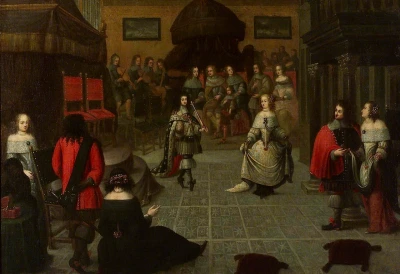
Charles II Dancing

Gonzales Coques, Charles II dancing at the Hague, May 1660? (Identification of the dancers is uncertain, but their deportment is very similar to other versions in which Charles II is recognisable)

It seems that there was a long tradition behind the grand balls at the early 18th-century French court, which was shared by the English court. Although Charles II rarely celebrated his birthday with a ball, those for his Queen became almost annual occasions. Such birthday balls would continue from the Restoration well into the 18th century. The bransles disappeared and the courante was replaced by the minuet but, except for these changes, later evidence suggests that the sequence of dances observed by Pepys remained much the same throughout the reigns of William and Mary, Queen Anne and the first three Georges.

Dances on the London Stage: Blouzabella

On 8 June 1703, the entr’acte entertainments at Lincoln’s Inn Fields included a duet by Prince and Mrs Elford entitled Blouzabella. The dance must have been at least moderately successful, because it was repeated on 11 June by (according to The London Stage) L’Abbé and Mrs Elford. Blouzabella was revived at Lincoln’s Inn Fields in 1703-1704, 1704-1705 and, for the last time, in 1711-1712 when it was given at Drury Lane. At each of these revivals it was danced by Prince, initially with Mrs Clark and finally with Mrs Bicknell.

The title of the dance suggests that it was a comic number. Blowzabella is the vulgar, ostentatious and shameless wife of the hero of Thomas Durfey’s The Famous History of the Rise and Fall of Massaniello, inspired by the Italian fisherman who in 1647 led a revolt against the rulers of Naples. Durfey’s play was first given at Drury Lane in May 1699. According to The London Stage, Massaniello was short-lived, although both it and the entr’acte dance it inspired may have enjoyed more performances than are recorded there.

There are some puzzles about this duet and its performers. We know all too little about Mrs Elford and her repertoire, except that the sparse surviving evidence suggests that she was an accomplished exponent of belle danse. She is generally advertised in serious dances and her one recorded choreography is a passacaille danced as a duet with the young Hester Santlow, probably in 1706 the year Mrs Elford left the stage. She seems an unlikely performer of a duet that draws on the antics of a low comedy character.

Mrs Elford regularly danced with Anthony L’Abbé, but the suggestion in The London Stage that they danced Blouzabella together is very likely to be wrong. The original advertisement for the performance says:

‘Also an Entertainment of several Dances by Monsieur Labbe, Mrs Elford, and others; particularly the Wedding Dance, and Blouzabella. The Medley Dance by Mr Prince and his Daughter. …’

The wording ‘and others’, together with Prince’s appearance on this bill as well as the one for 8 June, suggests that it was he and not L’Abbé who danced Blouzabella with Mrs Elford. As for Prince’s later partners, we know next to nothing about Mrs Clark and Mrs Bicknell was well-known as a comic actress as well as a dancer, although her range did not usually extend to low comedy.

Prince’s appearance in probably all of the known performances raises the possibility that he was the choreographer of Blouzabella. Who was Mr Prince? Was he the Joseph Prince who married Judith, the daughter of the dancing master Luke Channell, in 1678 and was in his mid-forties in the early 1700s? Or was he perhaps a son of Joseph Prince, who might then have been in his early twenties?

Any research into dances on the London stage must be undertaken with caution. Even well into the 18th century we cannot be entirely sure who danced these choreographies, where, when or with whom. Nor can we always be sure what sort of dances they were. Durfey’s Massaniello has several dance numbers, some of which were serious, so was Blouzabella not as comic a dance as its title might suggest?

Le Menuet de la Cour

More than three years ago, I posted a piece on Le Menuet d’Espagne, a duet published in 1715 that I had recently performed. I meant to follow it with a series of posts on various aspects of the minuet, but I went on to other topics instead. A few months ago, I performed Le Menuet de la Cour, a choreography published in notation around 1780. This minuet is, arguably, one of the most famous ballroom dances ever created. It inspired many later versions (from duets to quadrilles and beyond) and, in essence, survived for over 150 years.

Le Menuet de la Cour began life as a piece of music in Grétry’s opera Céphale et Procris, first given at Versailles in 1773. The tune was then used by the choreographer Maximilien Gardel for a minuet danced in act 2 of his ballet-pantomime Ninette à la Cour, first performed before the French court in 1777. In that production, and when the ballet arrived on the London stage in 1781, it was danced by two of the Paris Opéra’s stars Gaëtan Vestris and Anne Heinel. Was the dance published in notation by Malpied the same as the stage duet? We don’t know.

This minuet is short, with 78 bars in all, including the opening 8-bar révérence. It has an ABAABA structure. The notated Menuet de la Cour is not an orthodox ballroom minuet, despite containing figures that are quickly recognisable as the taking of right hands, the taking of left hands and the taking of both hands to draw the dance to a close. The Z-figure is there too, but it is hinted at through choreographic elaborations in each of the two B sections. The A section has 8 bars of music, but the B section is unusual with its 19 bars, if you remember that all minuet steps take two bars of music in 3/4 time. There are minuet steps, but these occur only in the two B-sections. However, much use is made of the minuet ‘grace’ steps (included since at least the early 18th century).

I have danced Le Menuet de la Cour on three separate occasions, with three different partners, and it is only this third time that I have felt I was beginning to understand and properly perform the choreography. The music, at least in the version I danced to, is dynamic. To my mind, it lends itself to heightened style and technique which is grand and almost combative. The playfulness that lies within the choreography is less obvious, and perhaps should not be emphasized.

I won’t try to analyse the dance in detail, but here are two plates from the notation. The first shows the end of the first B-section, at the finish of the Z-figure. The sequence is a series of jettés battus (unusual in the context of a minuet) followed by the pas de Marcel.

Menuet de la Cour 4

Maximilien Gardel, Le Menuet de la Cour, notated Malpied [1780?], plate 4

The other follows the second Z-figure and has a series of jettés and assemblés, followed by chassés and then a full turn on both feet ending with an ouverture de jambe. None are steps to be expected in a minuet.

Menuet de la Cour 8

Maximilien Gardel, Le Menuet de la Cour, notated Malpied [1780?], plate 8

Both sequences are followed by the anomalous single bar, used for a rond-de-jambe by the left leg, transferring the weight to leave the right foot free to begin the next step.

Is the notated Menuet de la Cour a ballroom dance? Well, yes, it is. But it is an exhibition ballroom dance meant to display before a discerning audience the technical skills, refined style and sophistication of the couple performing it. The choreography is demanding, in keeping with its stage origin.

The Pas de Menuet and Its Timing

Between 1688 and 1787 more than twenty different sources provide information about how to dance the minuet. They give a variety of details and I am not going to work through all of them. My interest here is the pas de menuet, the step that defines the dance, and its musical timing. The pas de menuet has four steps to be performed over six musical beats, two bars of music in triple time. As the dance manuals make clear there were a number of different versions of the step and various solutions to the issue of timing.

For some reason, Feuillet did not include minuet steps in his first edition of Choregraphie in 1700. He added them to the second edition of 1701 in a ‘Supplément des Pas’, notating four different versions of the pas de menuet.

Pas de Menuet Feuillet (2)

Feuillet, Choregraphie, 2nd ed. (Paris, 1701), Supplément de Pas (detail)

Feuillet provides no information about the timing of the step. He did address musical timing in his ‘Traité de la Cadance’ at the beginning of his 1704 collection of ‘Entrées de Ballet’ by Guillaume-Louis Pecour. He didn’t include the pas de menuet among his examples.

In his Rechtschaffener Tantzmeister (1717), Gottfried Taubert describes the same four versions of the pas de menuet as Feuillet – the pas de menuet en un seul mouvement, the pas de menuet à la boëmienne, the pas de menuet en fleuret and the pas de menuet à trois mouvements. He discusses timing in some detail, preferring the pas de menuet à la boëmienne because it accords best with his notions of the relationship between the steps and the musical bars.

‘It begins with the bend on the upbeat or last quarter-note of the previous measure; the rise comes on the downbeat of the new measure, and, while the legs remain extended, the right foot steps forward; on the second beat the body holds steady in the raised position; on the third beat the first stiff step is taken with the left foot. On the first beat of the next measure, another stiff step is taken with the right foot, adding a very quick bend of the knees at the end; rise again on the second beat, and in doing so step forward with the left leg. On the upbeat there is another bend right away, with the right so placed as to connect this compound step with the next.’ [Translated by Tilden Russell, The Compleat Dancing Master. 2 vols. (New York, 2012), vol. 2, p. 526]

Taubert does not like the popular pas de menuet en fleuret, because it does not accord with his aesthetic-musical preferences. He grudgingly accepts a timing which gives the first demi-coupé to the first bar and the fleuret to the second.

In Le Maître a danser (1725), Pierre Rameau describes the pas de menuet à trois mouvements and the pas de menuet en fleuret (which he calls the pas de menuet à deux mouvements). He gives the timing for the latter.

‘… which is performed within the Compass of two Barrs of triple Time, one called the Cadence, and the other the Contre-Cadence. But for the better Apprehension, it may be divided into three equal Parts; the First for the first half Coupee, the Second for the Second, and the Third for the two Walks, which ought to take up no longer Time than a half Coupee: But in the last Walk it is to be observed, that the Heel be set down to be able to make a Sink to begin another Step. [Translated by John Essex, The Dancing-Master (London, 1728), p. 44]

Kellom Tomlinson wrote his treatise The Art of Dancing in the mid-1720s, although it was not published until 1735. He describes three pas de menuet: Feuillet’s pas de menuet à la boëmienne, with its demi-coupés at the beginning and the end, which he calls the ‘English Minuet Step’; the pas de menuet en fleuret, which he calls both the ‘French Minuet Step’ and the ‘New Minuet Step’; and the pas de menuet en trois mouvements. His timing for the pas de menuet en fleuret gives the first bar to the opening demi-coupé, with the rise on the first beat, lowering the heel but keeping the knees straight on the second beat and sinking on the third beat. The second bar is given to the fleuret, with the rise of the demi-coupé on the first beat, the second step on the second beat and the third step on the third beat. Tomlinson does not specify the timing of the sink preparatory to the first demi-coupé.

When he writes of the pas de menuet sideways to the right, Tomlinson prescribes the pas de menuet en fleuret, using the same timing as that travelling forwards. When he comes to the ‘Minuet Step of three Movements’ (which, confusingly, he also calls the ‘New Step’), Tomlinson sets out a different timing.

‘The Rising or Receiving the Weight upon the Toe or Instep marks the Time to the first Note of the three belonging to the first Measure; the second is in the Fall of the Heel and Sink which prepares for the second Step of the four belonging to the Minuet Step, which is made by stepping of the left Foot forwards, in the same Manner as the first; and the Rising or Receiving of the Body upon the Instep is to the third and last note of the first Measure. The third Step of the said four is made with the right Foot stepping a plain straight Step forwards upon the Toe to the first Note of the three in the second Measure; the second is in the coming down of the Heel of the said right Foot and Sink that prepares for the fourth and last Step which is with the left Foot, in stepping forwards from the Sink aforesaid; and the Rising or Receiving of the Weight upon the Toe is to the third Note of the second Measure of the Tune, concluding in the same Position from whence it begun …’ [Tomlinson, The Art of Dancing (London, 1735), p. 110]

In his own notated version of the ballroom minuet (plate U in the treatise), Tomlinson uses the pas de menuet à trois mouvements whenever the dancers are travelling to the left.

I promised not to look at every treatise on the minuet, but I will include just one more, Malpied’s Traité sur l’art de la danse, which gives a late 18th-century version of this long-lived duet. Towards the end of his text he turns to the minuet and provides not only his own notation of the ballroom minuet but also examples of the timing of the pas de menuet en fleuret (the only step he uses).

Pas de Menuet Malpied (2)

Malpied, Traité sur l’art de la danse (Paris, 1770?), p. 100

His timings for the pas de menuet are closely related to those of Rameau, although Malpied was writing some fifty years later.

I ought to mention that modern practitioners of the art of baroque dance interpret these various instructions in different ways. One area of divergence is the timing of the plié at the beginning of the first demi-coupé – is it on beat 6 of the preceding bar, or on the ‘and’ which precedes the first beat of the bar in which the pas de menuet begins?


Famous French Ballroom Dances

Among the many ballroom dances published in Beauchamp-Feuillet notation in the early 1700s, eight choreographies have a claim to be famous. All were published in notation and recorded in manuscript collections numerous times. Almost all of them survived well beyond the first decades of the 18th century. All are by Guillaume-Louis Pecour and all were originally notated and published by Raoul Auger Feuillet. Whether or not these dances continued to be performed in the ballroom, they were known to dancing masters who went on teaching them long after the style and technique they exemplified had gone out of fashion.

These are the dances, with their first date of publication:

La Bourée d’Achille (1700)

La Bourgogne (1700)

La Forlana (1700)

La Mariée (1700)

Le Passepied (1700)

Aimable Vainqueur (1701)

L’Allemande (1702)

La Bretagne (1704)

Most were long-lived, but were they really that famous?

Two of these dances, Aimable Vainqueur and La Mariée, enjoyed extended lives on the London stage and I have looked at them in earlier posts. Five of the dances (including La Mariée) come from Feuillet’s very first collection of Pecour’s ballroom dances, published in 1700 alongside his treatise Choregraphie which explains the new notation system. That treatise and its associated collections of dances were reissued in 1709 and again in 1713. Significantly, these dances (together with the other three) were all included in Pierre Rameau’s Abbrégé de la nouvelle méthode dans l’art de d’ecrire ou de traçer toutes sortes de danses de ville, first published in Paris around 1725 and intended to introduce his revised version of Beauchamp-Feuillet notation. Rameau’s Abbrégé was reissued around 1728 and again around 1732. The dances must have become more widely known through the successive reissues of both works.

Two of the dances, La Bourée d’Achille and La Bourgogne, may have had more limited afterlives than the others. Neither featured in later printed treatises and were recorded only in what are thought to be early manuscript collections of notated choreographies. Although La Bourgogne does appear in I.H.P. Maître de Danse oder Tantz-Meister published in Leipzig in 1705, indicating that it quickly became known outside France. It is interesting to note that both of the choreographies have become familiar to modern practitioners of baroque dance, as they are often taught to beginners.

Le Passepied and La Bretagne were published as late as 1760 in Madrid, within Pablo Minguet’s El Noble Arte de Danzar a la Francesa. Le Passepied had also been included in I. H. P. Maître de Danse oder Tantz-Meister, while La Bretagne appeared in the translations of Choregraphie issued in London by Siris and Weaver between 1706 and 1730. L’Allemande, which I have also mentioned in an earlier post, appeared as late as 1765 in Magny’s Principes de Choregraphie, alongside more recent dances. Magny provided it with new music, perhaps to bring it more up-to-date. The choreography with the longest life of all was La Forlana, published around 1780 in Paris in a new notation by Malpied.

These dances probably owed their fame and longevity to a variety of factors, including their music, their original performers, their associations with particular people or places and perhaps the desire of individual dancing masters to find favour in court circles. They underline Europe’s (including Britain’s) widespread and enduring fascination with French court culture and not least its expression through dancing. I hope to be able to say more about them, particularly within an English context, in future posts.


A Year of Dance: 1698

On 4 January 1698, Whitehall Palace was destroyed by fire. Few of the buildings were left standing, apart from Inigo Jones’s Banqueting House (the only part of the palace to survive today). The disaster was less of a blow than it might have been, for most of the furnishings and movable objects were saved. The sprawling palace was not much loved by King William III, who preferred the more salubrious surroundings of Kensington Palace or Hampton Court. Plans to rebuild Whitehall Palace over the next few years came to nothing.

The visit of the Russian Czar, Peter the Great, between 11 January and 21 April, brought a different sort of chaos as the monarch was oblivious to the niceties of English court life. Abroad, Georg Ludwig succeeded his father as Elector of Hanover on 23 January 1698. His right of succession to the British throne was yet to be enshrined in law.

London’s theatres came under attack with the publication, in March 1698, of Jeremy Collier’s A Short View of the Immorality and Profaneness of the English Stage. The effects of his diatribe were insidious and long-lasting. However, dance was (it seems) beyond Collier’s reach. The newspapers announced the arrival of Anthony L’Abbé who was ‘lately come over and Dances at the Play-house’. L’Abbé had swapped the Paris Opéra for London’s Lincoln’s Inn Fields Theatre. He also danced before William III at Kensington Palace on 13 May 1698. His appearances marked the beginning of a long association with both the court and the theatre in England. November 1698 saw the first performance of John Dennis’s Rinaldo and Armida with music by John Eccles. Given at Lincoln’s Inn Fields, the piece was not a success although Eccles’s music was appreciated.

In 1698, Louis XIV turned sixty. He had been King of France for more than fifty-five years. This was the year that he signed the Treaty of the Hague (also called the First Partition Treaty) with William III in a vain attempt to settle the succession to the Spanish throne following the long-expected death of King Carlos II. Louis’s own son, the Grand Dauphin, had a claim through his mother who had been a Spanish Infanta. Louis set this aside, for the moment.

There was little of note at the Paris Opéra in 1698. Desmarets’s ballet Les Fêtes galantes, despite its title, bore no relation to Campra’s L’Europe galante, the great success of the previous year. Its complicated plot about the Queen of Naples and three princes all in love with her probably contributed to its failure.

The Menuet à Quatre: Figures

In my last post about the four French notated menuets à quatre, I promised to look at the figures. How do these differ between the choreographies? Where are they the same? How do they relate to the ballroom menuet à deux? These are just some of the questions to be asked.

An obvious first question is – how do each of these minuets for four begin? Presumably they all open with a révérence, although none of the notations show this. Perhaps the révérence took the same form as in the minuet for a couple, who honour the presence and then each other. In the case of the menuet à quatre, the first honour would therefore be to the facing couple. Or were the honours reversed, as they are in the later quadrille, so the first révérence is to your own partner and the second to your opposite? In any case, all four dances begin with the two couples facing each other.

Only two of the dances begin in the same way. The very first plates of the 1706 Menuet à Quatre and the 1751 Menuet aquatre figuret show the dancers performing two pas de menuet forwards and two backwards. In his Menuet à Quatre of c1713, Pecour has his couples moving sideways to the left, moving forwards to cross (right shoulders) on a diagonal and curling round to face one another again. His figure is an obvious allusion to the ‘Z’ figure of the ballroom minuet. Although the ‘Z’ figure is also referenced in the other choreographies, Pecour’s version in this dance is the most straightforward. Dezais begins La Carignan with a contredanse figure, in which each dancer casts out and then changes places with their partner.

How do these dances end? In both his Menuet à Quatre of c1713 and his Menuet aquatre figuret, Pecour has his dancers moving forwards and then backwards to end in a final révérence. In the earlier dance, they balancé forwards and back, do two pas de menuet backwards and their final coupé soutenue (which is on opposite feet) brings them together. His later choreography is simpler. The dancers do two pas de menuet forwards, one backwards and also move towards one another on the final coupé soutenue. The 1706 Menuet à Quatre has the dancers, in couples, taking inside hands and crossing (left shoulders) on a diagonal before sweeping around to return to place for the final révérence. The figure alludes to the minuet’s ‘Z’ figure but seems closer to a contredanse figure. Dezais draws on the final figure of the ballroom minuet, with his couples each taking both hands to end La Carignan, although they do so for only one pas de menuet before letting go with their outside hands for one pas de menuet forwards and one backwards before the final step into the révérence.

Taking right hands, taking left hands and taking both hands all feature in these dances for four, but transmuted into their contredanse counterparts. The 1706 Menuet à Quatre has a right hand and a left hand moulinet as well as a rond with all the dancers holding hands. Pecour’s c1713 Menuet à Quatre adds variations when taking right and left hands, for the ladies have to wait for the opposite man to cross the set to take right hands  and the men then have to wait for their partners to do the same before taking left hands. The plate for the rond shows the dancers only taking inside hands with their opposite, although each couple ends in their original place. Apart from briefly taking both hands in the final figure, Dezais’s dancers do only a right hand moulinet. He dispenses entirely with any equivalent of taking left hands.

In his Menuet aquatre figuret, Pecour runs through all the various permutations on taking hands, but this dance is a cotillon so perhaps they should be seen as changes and not as minuet figures at all. Working in couples, his dancers take right hands then left hands. After a repeat of the figure, they take both hands to move first clockwise and then anti-clockwise. The notation then has another circling figure, with a notation for taking hands that I have not seen before and cannot readily interpret.

Pecour Minuet aquatre figuret 34 detail

Pecour, Menuet aquatre figuret (notated 1751), plate 34 (detail).

Are the couples holding hands behind their backs or could this be an allemande hold? The notation for the latter is quite different in Pecour’s L’Allemande of 1702, the dance in which the hold was first recorded.

Pecour Allemande 2

Pecour, L’Allemande (1702), plate 2

Pecour then brings the four dancers together for a right hand and left hand moulinet. They all hold hands in a circle to dance clockwise and then anti-clockwise. As a final flourish, he makes them all face outwards for a rond clockwise and then anti-clockwise. This last change must have needed a bit of practice.

None of the choreographers of these minuets for four entirely loses sight of the ballroom minuet for a couple, but all have more than half an eye on contredanse figures. On the evidence of these notations, the menuet à quatre retained the challenge of the pas de menuet, but put it in a context that relinquished the ordeal of scrutiny by the assembled company in favour of the relaxed pleasure of dancing with them.