Category Archives: Country Dancing

Country Dancing Further Improved

The publication history of For the Further Improvement of Dancing, John Essex’s translation of Feuillet’s 1706 Recueil de contredances, is not entirely straightforward and raises some interesting questions.

For the Further Improvement of Dancing is dated 1710 on its title page. The earliest advertisement I know is in the Tatler for 23-25 March 1710. A third edition was advertised in the Spectator (the successor publication to the Tatler) for 5 March 1712. I have not yet come across an advertisement for a second edition. Indeed, there is no explicit evidence for the successive editions in any of the surviving copies of this collection. The first edition was sold by the music publishers Walsh, Randall, Hare and Cullen, together with the author. According to the Spectator advertisement, the third edition was ‘to be had nowhere but at the Author’s House in Rood-lane, Fenchurch Street’. How should this be interpreted? Had Essex simply taken over the remaining copies printed in 1710 to sell himself as a ‘third’ edition? Or had he fallen out with the music publisher John Walsh, as others were to do later?

There is just one copy of For the Further Improvement of Dancing which is indisputably a new edition, or, to be more precise, a reissue of the original edition in a different format with additional dances. Essex’s translation had originally been printed in the small, duodecimo format. This reissue is a much larger folio. It uses the original plates (For the Further Improvement of Dancing is printed throughout from engraved copper or pewter plates), but these are placed four to a page.

John Essex, For the Further Improvement of Dancing [1715?], plates 1 - 4

John Essex, For the Further Improvement of Dancing [1715?], plates 1 – 4

The newly added dances are readily identified by their larger format. There is one ballroom duet, The Princess’s Passpied, which shows the new layout:

John Essex, The Princess's Passpied, [1715?], first plate

John Essex, The Princess’s Passpied, [1715?], first plate

There are five new country dances, also in the new layout:

Liberty & Property

The Lottery

Mr La Gard’s Royall Swede

The Careless Husband

The Little Whigg

I will return to the titles of these in a subsequent post.

The volume is dedicated to the ‘Princess of Wales’, dating it to after the Hanoverian accession on 1 August 1714. The Princess is Caroline, wife of George Augustus the son of King George I. Essex praises her ‘Patronage and Encouragement’ of the art of dancing and offers her the dances he has added to his original treatise. I suggest that The Princess’s Passpied was intended for performance by Caroline’s eldest daughter Anne, the Princess Royal aged around seven, who would be the dedicatee of several more notated ballroom dances. The sole surviving copy of this folio edition of For the Further Improvement of Dancing, now in the British Library, may well be a presentation copy made especially for Caroline, Princess of Wales.

It is interesting to note that this unique copy, which has been dated to 1715, has an imprint claiming that it was to be sold by Walsh, Hare and ‘the Author’.  By this time, John Essex was presumably well-known as a dancing master. He was certainly careful to ensure that the title page specified that he ‘taught all the Ball Dances of the English and French Court’, probably meaning those that had been published in Beauchamp-Feuillet notation. The inclusion of The Princess’s Passpied would have underlined his expertise. Was he trying to recommend himself as dancing master to the new royal family?

Country Dancing Improved

A little while ago, I attended a ball where one of the country dances was The Busie Body. When I was told that it was by John Essex, I thought I ought to explore further.

In 1710, Essex translated Feuillet’s 1706 Recueil de contredances as For the Further Improvement of Dancing. What he translated was Feuillet’s introductory treatise on the simplified notation system used to record country dances. Instead of merely reproducing Feuillet’s collection of 32 country dances, Essex selected 10 from various sources. Three come from Feuillet’s 1706 Recueil: Pantomime; Gasconne; and The Female Saylor (La Matelotte in Feuillet). Two more dances are also French: Micareme and The Diligent, both from Feuillet’s VIme. Recüeil de danses et de contredanses pour l’Année 1708. The other five dances were, as Essex tells us in his Preface, ‘my own composing’. These are the dances titled Trip to the Jubilee, The Great Turk, The Busie Body, The Tatler and The Tost.

If the French were acknowledged as the masters of ballroom and stage dancing, la belle danse, the English claimed primacy in country dancing. Essex was happy to wave the flag in his Preface to For the Further Improvement of Dancing.

John Essex, Preface, For the Further Improvement of Dancing (1710), first page

John Essex, Preface, For the Further Improvement of Dancing (1710), first page

In this post, my interest lies in the titles of Essex’s own country dances and their links with stage and society in London.

Trip to the Jubilee must refer to Farquhar’s play The Constant Couple; or, The Trip to the Jubilee, first performed (so far as we know) at the Drury Lane Theatre on 28 November 1699. Farquhar’s play was one of the most popular of the early 18th century and was performed regularly until the 1790s. The ‘Jubilee’ was the Pope’s Jubilee year to be celebrated in Rome in 1700 – a trip to this event was a running joke throughout The Constant Couple. The dance and its music were first published in 1701 in the 11th edition of The Dancing-Master, described ‘as ‘tis Danced at the Play-House’. So it seems that Essex actually created this country dance for Farquhar’s play. He is certainly recorded as a professional dancer at Drury Lane in the first years of the 18th century.

The Great Turk uses music from the Turkish Entrée in Campra’s 1697 opéra-ballet L’Europe galante. Anthony L’Abbé made use of the same piece for his Türkish Dance in the early 1720s. Essex’s use of the music suggests that it was already familiar in London some years earlier. It is worth noting the danced entr’acte ‘Entertainment after the Turkish Manner’ given at Drury Lane on 2 February 1710. Did this perhaps also use Campra’s music?

The title of The Busie Body is taken from Mrs Centlivre’s play of the same name, first given at Drury Lane on 12 May 1709. This was another successful comedy played regularly in London’s theatres until the end of the century.  The published play has ‘A Dance’ towards the end, in accordance with the convention of a country dance performed by a play’s characters as the plot concludes. Could Essex’s dance have been performed in the original production of The Busie Body, even though he makes no mention of this?

The Tatler, obviously, refers to the famous periodical launched by Sir Richard Steele in 1709 and published three times a week until 1711. It dealt in news, gossip and the manners of the day and was frequently reprinted in collected editions throughout the 1700s.

The title The Tost was corrected to The Toast when Essex reissued For the Further Improvement of Dancing around 1715. (I will talk about this reissue in a later post). Essex may well have had in mind the ‘Toast’ as explained by Steele in the Tatler for 4 June 1709. She is:

‘… the Lady we mention in our Liquors, … call’d a Toast. … The Manner of her Inauguration is much like that of the Choice of a Doge in Venice: it is perform’d by Balloting; and when she is so chosen, she reigns indisputably for that Year; but must be elected anew to prolong her Empire a Moment beyond it.’

Was this dance implicitly dedicated to a well-known ‘Toast’ of the Kit-Cat Club (of which Steele was a member and to which he was referring)? Or was it meant as a compliment to the Duchess of Bolton, to whom Essex dedicated his collection? She was Henrietta née Crofts (c1682-1730), the illegitimate daughter of James, Duke of Monmouth. She married the second Duke of Bolton in 1697.

With his dances in For the Further Improvement of Dancing Essex is surely trying to appeal to a fashionable, London-based élite – the beau monde – members of which he hoped to attract as pupils.

Various Authenticities

When I first began to study baroque dance, I tried very hard to be authentic – not least because I was so often criticised for my ‘balletic’ approach. It took me some time to realise that such authenticity is impossible. We know a great deal about dancing in the late 17th and early 18th centuries (far more than most people realise), but there is just as much that we don’t and indeed cannot know. My own reconstructions of dances, particularly the solos danced by Mrs Santlow and Mlles Subligny and Guiot, owe as much (if not more) to my personal style and technique as a ballet-trained dancer as they do to the notations and dance manuals of the early 1700s.

The subject of authenticity came into my mind again a week or so ago, when I went to a talk at the Wallace Collection. The speaker was the choreographer and Director of the Birmingham Royal Ballet David Bintley. His new ballet The King Dances is based on Le Ballet de la Nuit, the 1653 ballet de cour in which the fourteen-year-old Louis XIV appeared as the rising sun and became known ever after as the ‘Sun King’. Bintley talked about his forays into history and the world of baroque dance as he developed his choreography. He had gone so far as to have a baroque dance expert give instruction to his dancers – only to find that the unfamiliar style and technique was too difficult to learn in a short period. Although it marked the beginning of ballet, baroque dance was far from the strength and extension now characteristic of its descendant.

At the time of writing, I have not seen Bintley’s The King Dances so I cannot comment on the ballet. However, the photographs of the production are stunning. The young male dancers look as fabulously glamorous as their youthful antecedents at the French court must have done. When they are caught in mid-step the effect is strangely evocative of the ballet de cour, as we glimpse it through the few surviving designs for costumes and scenes. Could Bintley’s work possibly be ‘authentic’ in ways that a production consciously attempting complete ‘authenticity’ could not?

I thought about authenticity again this weekend, while I was taking part in a dance display for a heritage open day which also gave me time to watch. The dances – several cotillons by Dezais and a couple of ballroom duets – were all faithfully reconstructed from 18th-century sources. The costumes were handsome and in good period style, right down to the corsets. However, these were not the essential factors that made the display authentic. There was a range of skills and experience among the dancers and the dances were practised but not perfect. The dances were lively and all the dancers very evidently enjoyed performing them. They took pleasure in dancing with each other and for their audience. I couldn’t help thinking that it must have been very similar at many real balls in the 18th century – except that we may well have danced better than our forebears did.

Authenticity surely resides as much, if not more, in the spirit of the reconstruction as in the letter.


Two more Dezais dance names

There are just two more dances in Dezais’s 1725 Premier Livre de Contre-Dances that I haven’t considered yet – L’Inconstante and L’Esprit Follet. Again, I won’t look at the choreographies but pursue the sources of the dances’ names.

L’Inconstante, for four dancers, is the second dance in the collection. Its duple-time music is identified on the notation as a tambourin. The music has A and B strains of eight and sixteen bars respectively, while the dance has the ‘Change’ and ‘Figure’ structure of a cotillon. So far, I have not been able to find a plausible source for the title. Marivaux’s play La Double Inconstance was given at the Thêâtre Italien on 6 April 1723, but there seems to be nothing to link it to Dezais’s choreography. It is interesting to note that, in London, Farquhar’s play The Inconstant was revived at the Drury Lane Theatre on 16 October 1723. It is unlikely that there is a link, so is there another source which also flirts with the idea of inconstancy?

L’Esprit Follet, for eight dancers, is the seventh dance in the Premier Livre. The duple-time music is titled ‘Rigaudon’ but has the half-bar upbeat of a gavotte. The A strain has four bars and the B strain has eight. The dance has the familiar structure of a cotillon. I haven’t got to the bottom of this title either. ‘Esprit follet’ can be translated as ‘goblin’, which gives me the idea of mischievous (if not malicious) playfulness. Esprits follets featured in the ballets de cour of the mid-17th century and there is a 1684 play by Noël Le Breton de Hauteroche titled L’Esprit Follet. There is no singing or dancing in any of the editions I’ve looked at, so I’m tempted to go in a different direction.

The repertoire of the Italian comedians in 17th-century Paris included a play entitled Arlequin Esprit Follet. I haven’t been able to track down any performances in Paris either at the fairs or the Théâtre Italien in the early 18th century, but a piece with that title was played in London intermittently between 1719 and 1735. The earliest of these performances were given by a troupe led by Francisque Moylin which included the Sallé children Francis and Marie. This suggests that Arlequin Esprit Follet was a given regularly in Paris and elsewhere.  In the absence of a text and, particularly, any music it is impossible to prove, but could Dezais’s  cotillon L’Esprit Follet draw on music from the commedia dell’arte piece Arlequin Esprit Follet?

Do such links, which may be less tenuous than I suggest, say anything about the spirit in which these contredanses should be performed?


Le Cotillon de Surenne

Le Cotillon de Surenne, for eight dancers, is the fourth contredanse in Dezais’s 1725 Premier Livre de Contre-Dances. The music is a gavotte, with A and B strains of four bars each, and the dance has the cotillon ‘Change’ and ‘Figure’ structure. I’m not going to examine the choreography. Instead, I’ll pursue possible sources for the name of this dance.

Surenne (also spelled Suresne in the 18th century, and now Surêne) is a place in the environs of Paris. Nowadays, it lies within the city’s suburbs around six miles west of its centre. In the 1700s, it seems to have been somewhere that Parisians went for entertainment. Could the title of Dezais’s choreography refer to this? Or could it be linked to a short comédie-ballet, written by Florent Carton Dancourt , with the title L’Impromptu de Suresne? According to the title page of the libretto published in 1713, this piece was played that year by the ‘Comediens du Roy’ at Surêne itself. The composer of the music is not named.

The comédie-ballet ends with a divertissement of singing and dancing, with several dances. There is a Passepied, a Menuet, a Rigaudon, another Menuet, an Entrée and a Gavotte (also titled ‘Branle’). The 1713 libretto has no music, but this was included when the work was republished in Paris in 1760 in volume eleven of Les Oeuvres de Théâtre de M. d’Ancourt.  The following lines are sung to the gavotte tune:

En ces lieux l’Amour amene

Les plaisirs, les jeux, les ris;

Des plus doux nœuds il enchaîne

Les coeurs de ses feux épris,

Chacun déserte Paris

Pour venir rire à Surêne.

While the music is recognisably a gavotte, and has A and B strains of four bars each, it is not the same as that of Dezais’s cotillon. It may or may not be the original music for the divertissement.

It is possible that Dezais drew on earlier music for L’Impromptu de Suresne. It is more than likely that his title Le Cotillon de Surenne refers to the pleasures to be encountered just outside Paris.

Hungarian dances in the ballroom

The first dance in the 1725 Premier livre de contre-dances is the Cotillon Hongrois for four. I cannot  identify with certainty a person or an event that might have inspired the name ‘Hongrois’ but in this post I will explore the wider context for the dance and put forward a suggestion.

Hungary was the largest territory within the Habsburg Austrian monarchy. Charles VI was Holy Roman Emperor, ruler of Austria and King of Hungary from 1711 until 1740. He was also Prince of Transylvania, which had once been part of Hungary and retained strong links with that country. The history of the area in the 17th and early 18th centuries is complex. I will not even attempt to summarise it, except to say that events there influenced and were influenced by what was happening in the rest of Europe.

In his XIIIe Recueil de danses pour l’année 1715, Dezais included La Transilvanie a ballroom duet by Claude Ballon. This choreography has some resemblance to a cotillon. The music is in duple time and, according to Francine Lancelot in La Belle Dance, it is very similar to a gavotte. The musical structure is AABACAA. The choreographic structure has ‘verses’ and a repeated ‘chorus’. The step sequence for the opening section is used again for the third and fourth A repeats, although the direction of travel and the floor pattern is varied each time. This, of course, is the collection in which Dezais advertises his manuscript versions of contredanses for eight, two of which (Le Cotillon de Surenne and L’Esprit Follet) were finally printed in 1725. Although it is not mentioned, was the Cotillon Hongrois another dance that significantly predated its appearance in the Premier livre?

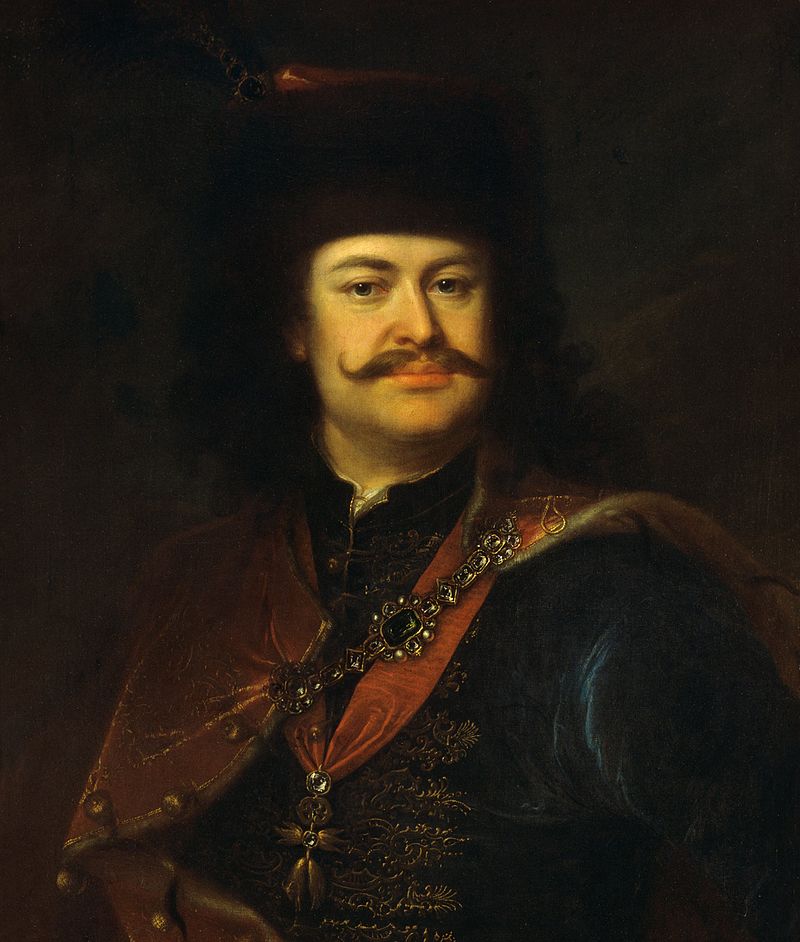
There may, perhaps, be a specific reason for the name La Transilvanie. Before the accession of Charles VI in 1711, the Prince of Transylvania had been Francis II Rácóczi. He led an unsuccessful uprising in Hungary in the early 1700s, with initial encouragement from the French. Between 1713 and 1717 he was in exile in France. Was La Transilvanie dedicated to him? Does the Cotillon Hongrois date to the mid-1710s rather than the mid-1720s and does it refer to Rácóczi and his exploits in Hungary?

Adám Mányoki. Francis II Rákoczi. 1724

Adám Mányoki. Francis II Rákoczi. 1724

A portrait of Rákoczi shows him in dress similar to a hussar. Did this depiction influence the Hungarian dances that were popular on the London stage in the 1720s and 1730s? I will look at these in a separate post.

What’s in a date?

Some of the dances in Dezais’s Premier livre de contre-dances may have been created in the early 1720s, but others were probably at least ten years old. In his ‘Avertissement’ at the beginning of the XIII Recueil de danses pour l’année 1715, Dezais wrote:

‘On donne avis qu’il y a un tres grand nombres de Contredanses à huit qui ne sont pas imprimées et qui se vendent écrit à la main: scavoir le Cotillon nouveaux, la Christinne, le Pharaon, la Bœmienne, la Utrech, le Cotillon de Surenne, l’Esprit Follet, et le Cotillon des Fêtes de Thalie.’

The ‘Avertissement’ reveals the popularity of cotillons in the early 1700s. It also highlights the topicality of some of the dance names. ‘la Utrech’ must surely refer to the Peace of Utrecht, the name given to the several treaties signed in Utrecht during 1713 and 1714 which between them ended the War of the Spanish Succession. Dezais published Le Cotillon des Fêtes de Thalie in his XIIIIe. Recueil de danses pour l’année 1716. Mouret’s opéra-ballet Les Fêtes ou le Triomphe de Thalie was first given at the Paris Opéra in 1714. Le Cotillon de Surenne and L’Esprit Follet must surely be the choreographies published in the 1725 Premier livre de Contre-dances so they were not quite so topical when they finally appeared in print. I will try to unravel the references within the names of both in later posts.

I will resist the temptation to investigate the other dance names in Dezais’s 1715 list. As several dance historians have noted, the names of dances may indicate that they were created some years before being published in notation. The discrepancy in dates (which may not be obvious) can also lead to false conclusions when trying to discover the references within dance names. My suggestions for the dedicatees of Dezais’s  contredanses L’Infante and La Carignan may, or may not, be correct.

What’s in a name?

Many ballroom duets and country dances have distinctive names. These might link the choreographies to their music, to a play, or to a place or a dedicatee. Dance names provide glimpses of the social and cultural milieu within which the dances were performed.

I’ve been looking at the Premier livre de contre-dances published by Dezais in 1725 and I thought it would be interesting to follow up some of the dance names in this collection. At first, it seemed unlikely that I would be able to discover very much but as I pursued my research I began to see links with other areas of my dance history interests – the ballet de cour of Louis XIV, royal and aristocratic dancers and dancing on the London stage, among other topics. I very quickly gathered enough information for several posts.

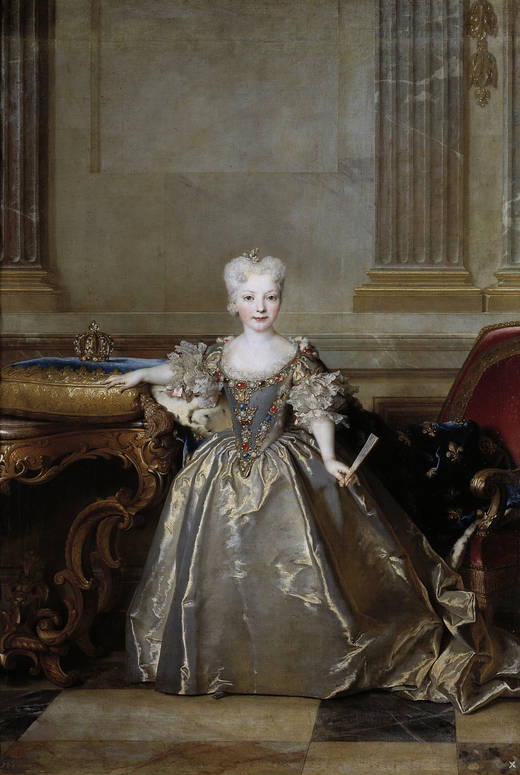
I’ll look at just a couple of the dance names here, both linked to royalty. L’Infante, the third dance in the collection, is a contredanse for eight with a structure similar to the later cotillon. The name obviously refers to a Spanish princess or Infanta. The French and Spanish royal families intermarried several times during the 17th and 18th centuries. Louis XIV’s mother was a Spanish princess and so was his wife. His successor Louis XV was briefly betrothed to the Spanish infanta Mariana Victoria. She was the daughter of King Philip V, younger brother to Louis’s father the duc de Bourgogne, so the two were first cousins. She arrived in Paris in 1721 to live at the Palais du Louvre until she was old enough for the marriage to take place. The young King was eleven, but his intended bride was only three years old. By 1725, following the King’s serious illness, the King’s ministers had realised they must find a princess who was old enough to be married and quickly provide an heir to the throne. The betrothal with the little Infanta was ended and she was sent back to Spain in March that year. In September 1725, Louis XV married the 22-year-old Polish princess Marie Leszczyńska. Mariana Victoria married the Prince of Brazil, heir to the Portuguese throne, in 1729. Was she the Infanta of Dezais’s contredanse?

Nicolas Largilliere. The Infanta Mariana Victoria. 1724

Nicolas Largilliere. The Infanta Mariana Victoria. 1724

La Carignan, the last dance in the Premier livre, is a minuet for four. The dance’s name links it to the royal house of Savoy. Victor-Amedée of Savoy, prince de Carignan was probably the dedicatee of Pecour’s ballroom duet La Carignan, published by Feuillet in the IIme Recueil de danses de bal pour l’année 1704. Dezais’s contredanse may have honoured another member of the Savoy-Carignan family. Victor-Amedée, his wife Marie-Victoire of Savoy and their children had been resident in France since the late 1710s. Their daughter Anne-Thérèse, born in Paris in 1717, is a possible dedicatee of the 1725 choreography.

These dance names, like many others, were topical, but were dances always created – and named – close to their publication date?


L’Ecossoise

L’Ecossoise is the eighth of the nine dances in Dezais’s Premier livre de contredances of 1725. It is particularly unusual among country dances for its line-up of four men and two women. In his Avertissement at the beginning of the book, Dezais says that the contredance can also be performed by four women and two men.

The music is a gavotte. Dezais notates a few of the steps, mainly pas de rigaudon but also (for the men only) half-turn sprung pirouettes.  Apart from its unorthodox line-up, L’Ecossoise is also interesting for its successive formations. At the opening of the dance, the performers face one another across the dance space in two lines with the women between the men. Although they continue to face one another for much of the choreography, there are three places where they all turn to face their audience. On two occasions they are in perpendicular or ‘right’ lines one behind the other, the first time with the women at the back and the second time with them at the front. On the third occasion, they form one ‘diametrical’ line across the space. (The terminology comes from Feuillet’s Choregraphie, via Weaver’s translation). The first ‘right’ line is immediately followed by the ‘diametrical’ line. At the end of L’Ecossoise, the dancers are in a rectangular formation, with the women top and bottom and the men to either side. The contredance has conventional country dance figures, including left-hand and right-hand stars, right and left hand turns and circles, but some of the formations suggest that it might have originated as a display dance.

The title, L’Ecossoise (Scottish lady)may come from the music, but could the dance and its music have originated on the French stage? I wondered whether it might have come from a piece given at the Paris fair theatres or the Théâtre Italien, but I can’t find anything obvious among the titles of their respective repertoires. Voltaire wrote a play L’Écossaise, but that did not reach the stage until 1760.

Was there a London connection? ‘Scotch’ dances had been popular in London’s theatres from at least 1700, but there is little to link these with dancing on French stages. One danced entertainment, The Dutch and Scotch Contention; or, Love and Jealousy, which features a Highland couple, was performed in Paris as well as London, but it dates to 1729.

There are, of course, ‘Scotch’ and ‘Highland’ dances in the many editions of Playford’s The Dancing Master as well as elsewhere. I won’t pursue these here. However, one dance did catch my eye as I was looking through various sources. Confess was published in 1651 in The English Dancing Master. It isn’t a ‘Scotch’ dance but its line-up is two men and four women. The dancing master Confess had links with the English court in the early 17th century, so perhaps this dance was intended to have an element of display. There is also a figured minuet for six ladies by Mr Shirley in Pemberton’s 1711 An Essay for the Further Improvement of Dancing, but that takes me a little too far from my original topic.

Research into possible connections and influences between the dances of the 18th century is endlessly fascinating, but there is nothing like performing these choreographies to provide real insights. Here is one version of L’Ecossoise in performance.

Cotillon Balls in 1769

In 1769, cotillon balls were even more popular than they had been the year before. The earliest advertisement of the year appeared in the Public Advertiser for 27 February 1769.

‘Mr. Noverre’s Ball will be where it was last Year, on Wednesday the First of March. Tickets at Half a Guinea each; to be had only of his Scholars, or at his House in Surry-street in the Strand. … After the Minuets and French Cotillons till Ten o’Clock by Mr. Noverre’s Scholars, there will be a Ball and Refreshments for those Ladies and Gentlemen who Honour him with their Company.’

A later advertisement provided the additional information ‘The Doors to be opened at half an Hour after Six. Minuets to begin at seven precisely’. The time devoted to minuets and cotillons was extended to ten-thirty.

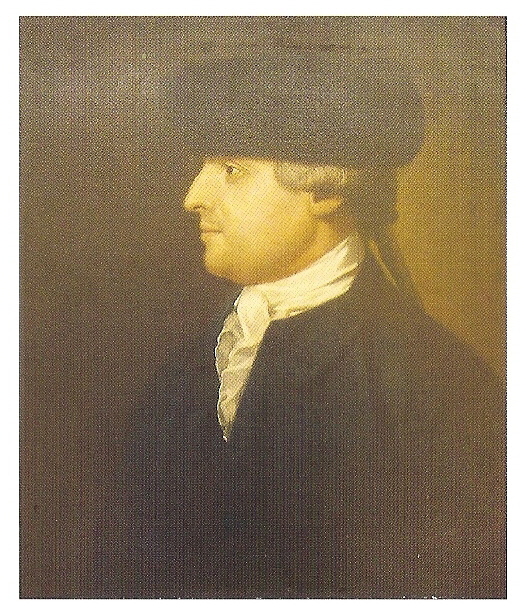
Mr. Noverre was Augustin, younger brother of the famous choreographer Jean-Georges Noverre. Augustin pursued a career as a dancer and dancing master in England, publishing at least two collections of cotillons and other dances. He later moved to Norwich, where he established his son Francis as a leading dancing master. He is one of very few dancers and dancing masters of the period for whom we have a portrait.

Augustin Noverre. Artist Unknown. The portrait was presumably painted while Augustin was working in London.

Augustin Noverre. Artist Unknown. The portrait was presumably painted while Augustin was working in London.

Cotillons are currently enjoying a revival in 21st-century Norwich.

The Public Advertiser for 1 March 1769 repeated Noverre’s notice of his ball. It also advertised ‘Mr. Yates’s Ball’ to be given on 7 March at Haberdashers Hall. Tickets were again half a guinea and ‘After the Minuets and Cotillons are over [these were presumably performed by Mr Yates’s pupils], there will be a Ball for the Ladies and Gentlemen’. The Gazetteer and New Daily Advertiser for 9 March 1769 advertised ‘the first of the two Nights Subscription for Minuets and Cotillons’ (the date of this event is illegible) at Almack’s, as well as Mr. Prevel’s ball on 15 March which offered the usual pattern of minuets and cotillons by his scholars followed by a ball. The ladies and gentlemen who attended the latter ‘(tho’ they are not his scholars) may dance the minuet, country dances, and cotillons, if they chuse it’. There seem to have been some well-established conventions surrounding these events.

Gallini’s turn came a little later. The Gazetteer and New Daily Advertiser for 16 March 1769 announced:

‘Mr. Gallini’s Annual Ball … at Almack’s Assembly-Room, in King-street, St. James’s square, on Friday the 7th of April. After his scholars have danced Minuets, Cotillons and Allemandes, the company in general may dance Country-dances and Cotillons.’

These events seem to have been intended to recommend the dancing master’s teaching through the performances of his scholars. The minuets at such balls were apparently a showpiece for well-drilled pupils. The ‘company in general’ were expected to do no more than watch a sequence of these exacting duets, before they enjoyed the easier dances.

As spring advanced, the pleasure gardens began to offer their entertainments. The Gazetteer and New Daily Advertiser for 8 May carried advertisements from both Vauxhall Gardens and Ranelagh. On 10 May, Vauxhall was to offer ‘A Ridotto al Fresco, (for one night only) to consist of Grand Illuminations, Extraordinary Decorations, a Concert, and a Ball’. Three different spaces were allotted for dancing, with one room devoted to cotillons. On 12 May, at Ranelagh there would be ‘A Jubilee Ridotto, or Bal Pare. … besides the usual entertainments, there will be country dances and cotillons’. The new contredanses françaises were indispensible not only at balls, but also at London’s most fashionable amusement venues.

Unfortunately, a report in the St James’s Chronicle for 9-11 May 1769 revealed that at Vauxhall ‘The Place was so crowded, that no Ladies of Condition chose to dance, … Some few Cotillons however were danced in the Princes Room’. Would-be dancers may have fared better at Ranelagh where, according to the London Chronicle for 11-13 May 1769, despite the ‘exceedingly numerous’ participants and a great variety of other attractions ‘The company also danced country dances and cotillions’.

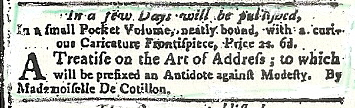
The newspapers for this year record many other balls, in provincial cities as well as in London. However, the craze for cotillons is tellingly underlined by an advertisement of a different sort.

St James’s Chronicle, 1-3 August 1769.

St James’s Chronicle, 1-3 August 1769.

Did this satire ever appear (if indeed the notice is not a spoof, or a reference to another form of entertainment)? I have not yet been able to track down a copy.