Author Archives: moiragoff

The ballets of Louis XIV: a list

Here is a list of the ballets performed at the court of Louis XIV between 1648 and 1669.

1648       Ballet du Dérèglement des passions

1651       Ballet de Cassandre

1651       Ballet des festes de Bacchus

1653       Ballet de la nuit

1654       Ballet des proverbes

1654       Les Nopces de Pélée et de Thétis

1654       Ballet du Temps

1655       Ballet des Plaisirs

1655       Ballet des Bienvenus

1656       Ballet de Psyché

1656       Ballet de la Galanterie du Temps

1657       Ballet de l’Amour malade

1657       Ballet des plaisirs troublés

1658       Ballet de l’Alcidiane

1659       Ballet de la raillerie

1660       Ballet de Xerxes

1661       Ballet royal de l’impatience

1661       Ballet des saisons

1662       Ballet d’Hercule amoureux

1663       Ballet des arts

1663       Les Noces de village

1664       Ballet des amours déguisés

1665       Ballet de la naissance de Vénus

1666       Le Triomphe de Bacchus

1666       Ballet des muses

1668       Le Carnaval

1669       Ballet de Flore

Not all of these were ballets de cour. Some were smaller-scale and more intimate mascarades. There were other ballets over this period, notably the comédies-ballets of Lully and Molière, which mostly involved professional dancers. The ballets de cour were danced, first and foremost, by the king and his courtiers. Why were these ballets performed? What were they about? Who danced in them? How much did they influence later dance works, not only in France but throughout Europe? I can see that I will have to do some research into recent writing on the subject if I am to find out.

Nicolas de Larmessin. Louis XIV. 1661. © Trustees of the British Museum

Nicolas de Larmessin. Louis XIV. 1661. © Trustees of the British Museum

My interest is also in how they affected dancing on the London stage. Most of these ballets de cour were performed while England was suffering a civil war and then living under a puritan commonwealth government. The English tradition of the masque was interrupted by these calamitous events and never fully revived following the restoration of Charles II in 1660. However, French dancing was to be profoundly influential in London after 1660, both at court and in the playhouses. Before I can pursue that topic, I need to look more closely at the French ballets de cour and their performers.
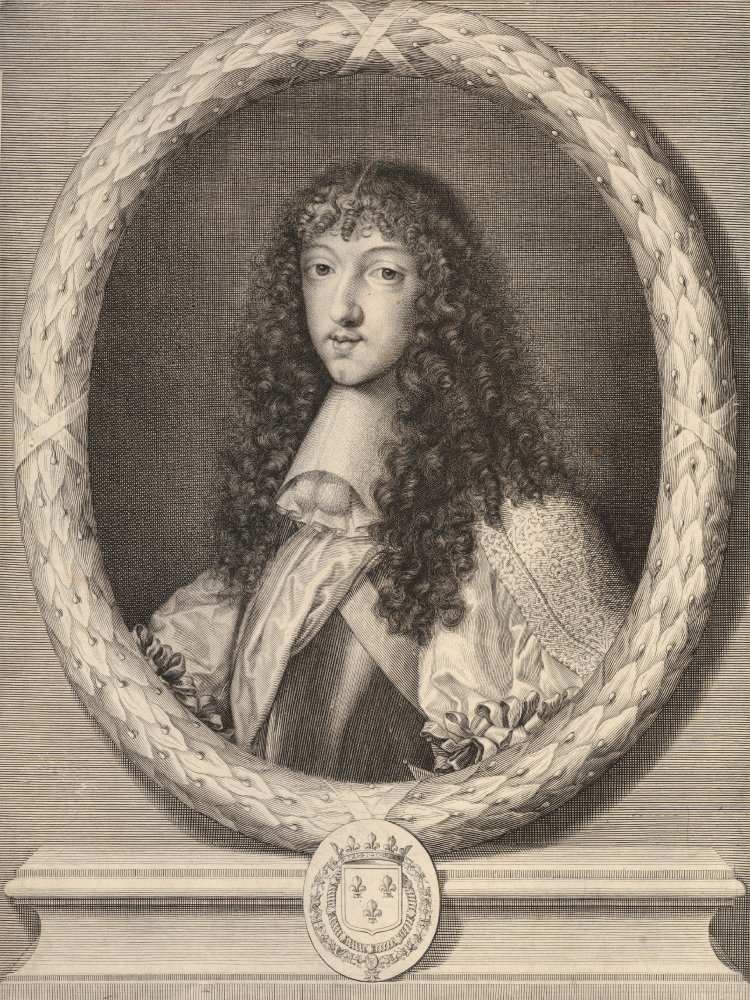
The Morning Star: Monsieur and the ballet de cour

Much has been made of the dancing skills of Louis XIV, who performed in so many of the ballets given at his court between 1651 and 1669, but what of his brother Philippe duc d’Orleans known simply by the honorific title ‘Monsieur’? In the ballet, as in life, he was not allowed to overshadow the Sun King. Monsieur made his first appearance as a dancer in the Ballet de Cassandre, in which Louis XIV also made his debut. While the thirteen-year-old Louis took two dancing roles, Philippe (aged eleven) danced only as a Page de Cassandre. Later that same year he danced as a Fille (Young Girl) in the Ballet des Festes de Bacchus. At this time (and for many years to come) female roles were almost invariably danced by boys and men. Louis XIV himself danced female roles on several occasions, the last being in the 1666 Ballet des Muses when he was in his late twenties.

Monsieur’s notable roles included L’Estoille du Point du Jour (The Morning Star) in Le Ballet de la Nuit in 1653, in which he heralded the appearance of the King as Le Soleil Levant (the role that made Louis, definitively, the Sun King). In 1656, when he was sixteen, Philippe appeared in the Ballet de Psyché as Talestris, Reine des Amazones (Talestris, Queen of the Amazons) with four male courtiers as his fellow female warriors. The customary verses written to celebrate his performance and printed in the ballet’s libretto declared ‘like a true and perfect Amazon, you combine beauty and courage’. After 1656, Monsieur’s appearances in ballets de cour became less frequent, although he did dance in several of these increasingly extravagant productions during the early 1660s.

Following their marriage in 1661, Philippe’s wife Henriette d’Angleterre (sister of Charles II, King of England and known as ‘Madame’) began to take a leading role in court entertainment. She appeared alongside her brother-in-law Louis XIV in a number of ballets. In 1666, Monsieur again took the role of L’Estoille du Point du Jour – this time reflecting the glory of Madame, who appeared as Venus. Below is a list of Monsieur’s dancing roles (spellings generally follow those in the original libretti). At the moment, I do not know why he did not appear in so many of the ballets in which his brother Louis took leading roles as a dancer.

Philippe d’Orleans. Print by François de Poilly I, after Jean Nocret. c 1660. © Trustees of the British Museum

Philippe d’Orleans. Print by François de Poilly I, after Jean Nocret. c 1660. © Trustees of the British Museum

Monsieur’s Dancing Roles:

1651       Ballet de Cassandre (Page de Cassandre)

1651       Ballet des festes de Bacchus (Fille)

1653       Ballet de la Nuit (Galant; L’Estoille du Point du Jour)

1654       Les Nopces de Pélée et de Thétis (Pescheur de Corail; Un Amour)

1654       Ballet du Temps (L’Esté)

1655       Ballet des Plaisirs (Paren des Mariez; Courtisan)

1656       Ballet de Psyché (Talestris, Reine des Amazones; L’Hymen)

1661       Ballet des Saisons (Vendangeur)

1662       Ballet d’Hercule Amoureux (L’Hymen)

1664       Ballet des Amours Déguisés (Amour déguisé en Dieu Marin)

1665       Ballet de la Naissance de Vénus (L’Estoille du Point du Jour)

Dancing the cotillon: Gherardi’s figures, from his Second Book of Cotillons

In his Second Book of Cotillons, Gherardi told his readers ‘The Figures the most in vogue, & of which all French Country Dances are Compos’d, are the following’. His list runs through twelve basic figures:

Les Chaines

Les Pirouettes

Les Carrés

Les Allemandes

Les Passes

Les Courses

Les Ronds

Les Mains

Les Moulinets

Les Poussettes

Les Enchainements

Les Chassés

He adds ‘from these Figures are derived all the others that are made use of in these Dances’. Gherardi’s list is not the same as Gallini’s, although there is considerable overlap.

He chooses to explain only five of these figures: Les Pirouettes, Les Carrés, Les Courses, Les Poussettes and Les Chassés – ‘those which hitherto have not been properly explained’ (presumably also the ones that, in his opinion, ‘seem the most difficult’).

Whereas Gallini gives only a brief explanation of how to perform a half-turn pirouette on both feet, Gherardi describes a number of different pirouettes, indicating how they may be incorporated into figures. Pirouettes are performed using the third position:

‘ … some-times turning only half round, & sometimes whole, either to the Right or Left: or sometimes two whole turns round, of the same side; accompanied, frequently, with turning under the Partner’s Arm.’

He also describes a pirouette in an over-crossed fifth position, and the use of a ‘Chassé en tournant’.

Gherardi uses diagrams to help explain some of these basic figures. He says, waspishly, of the Petit Carré à quatre Personnes that ‘This Figure is by some, very wrongly termed Back to Back, but it is not the same as Back to Back’.

Gherardi, A Second Book of Cotillons. London, [1768?], p. 4.

Gherardi, A Second Book of Cotillons. London, [1768?], p. 4.

As the diagram shows, the four dancers (two men and two women) who perform the Petit Carré dance around the other four, who stand still.

When he turns to Les Courses, Gherardi again hints at some of the squabbles between rival dancing masters.

Le quart de Course

‘Is only when each Couple perform a quarter of la Course, by which means the first Couple take the Place of the fourth, the third of the second, & the fourth of the third. This figure is frequently, though improperly called, la Promenade, la Procession.’

Gherardi elaborates on Gallini’s simple Poussette, with a Poussette en tournant and a Chaine en Poussette.

Gherardi, A Second Book of Cotillons. London, [1768?], p. 9

Gherardi, A Second Book of Cotillons. London, [1768?], p. 9.

Gherardi, A Second Book of Cotillons. London, [1768?], p. 10.

Gherardi, A Second Book of Cotillons. London, [1768?], p. 10.

Similarly, where Gallini only describes how to perform the chassé step, Gherardi explains a series of Chassé figures which make use of it. He has Chassé Simple, Chassé dessus et dessous, Chassé ouvert and a Chassé double which ‘Is a Chassè with the lady: if towards the right, the Lady leads, if towards the left, the Gentleman; having hold of hands’.

This introduction to the most fashionable figures ends with descriptions of some basic moves:

Aller Figurer devant un Couple

Defaire une Figure

Faire une Figure en sens contraire

Contre partie d’une Figure

After all this advice, he is careful to add:

‘Although Mr. Gherardi has endeavoured to be as explicit as possible in the direction for the Figure of each Dance, yet if any Lady or Gentleman does not fully comprehend it, Mr. Gherardi will be very ready to give all farther explanations that may be necessary, as well by Practice as Theory, on application to him for that purpose.’

He finishes the introduction to his second collection with a lengthy advertisement for his Cotillon Academy.


Thinking About: Dances, Dancing and History

I recently began to learn the Viennese waltz. I am a newcomer to ballroom dance, but it seems very different to the modern ballroom waltz. I couldn’t help wondering about its history. I have been told it is earlier than its modern counterpart, but how far back does it go? How does it relate to the early 19th-century waltz I was dancing just a few weeks ago?

The early 19th-century waltz raised another question. How does it relate to the minuet? The waltz step we used seemed to share the rhythmic characteristics of the French minuet step (called ‘One and a Fleuret’ by the dancing master Kellom Tomlinson). The man steps onto his left foot and does a quarter-turn pirouette in the first bar, followed by three steps in the next bar (the waltz, like the minuet, is in 3 / 4). The woman does the opposite. Of course, the couple revolve in a clockwise direction, while travelling anti-clockwise around the ballroom, quite unlike the minuet with its serene floor patterns and its fixed front. This waltz was in a hold which was obviously moving towards the modern ballroom hold. The waltzes (French, sauteuse, jetté-sauteuse and German) described by Thomas Wilson in his 1816 treatise seem very different both in steps and hold. So what was going on? How was the waltz developing and changing during the 19th century? Where does the Viennese waltz fit in?

I’ve also been struggling with Argentine tango. At the workshop I went to recently, we were taught a small number of basic steps, and told that these were all we needed to dance tango – everything else was derived from them. My mind immediately flew both to baroque dance and to modern ballroom and Latin. Don’t they all rest on just a few basic steps, which can be joined together, varied and decorated in all sorts of ways to produce an extensive and rich vocabulary of movements? Modern ballroom and Latin dances, as well as Argentine tango, are social dance forms intended for the ballroom, and all are improvisational – like the 18th-century minuet. Modern dances for the stage, or for competitions, have fixed routines – just like the baroque ballroom and theatrical choreographies.

Thinking about the different ballroom and Latin dances, with their various shared vocabularies of steps and their very different musical and stylistic qualities, my mind jumped again to baroque dance and its several dance types. These also share the same steps but are otherwise distinct, musically at least. I am wondering whether being able to grasp the differences between the modern waltz, the foxtrot and the quickstep, and between the rumba and the cha-cha, might help me as I try to differentiate the saraband, the loure, the bourée and rigaudon? The differences between all these dances might seem obvious (at least to the initiated), but they can be hard to interpret in performance unless one is an expert.

So, is all this dancing divisible into ancient and modern, where never the twain shall meet, or is it all actually variations on a shared theme?


Dances for four: the sources

The earliest notated and published dances for four appear in the recueils or collections of dances published in Paris annually from 1702.

Le Cotillon is from IIIIe Recueil de dances de bal pour l’année 1706.

Le Menuet à quatre is from Vme Recueil de danses de bal pour l’année 1707.

Feuillet’s Le Passepied à quatre is from IX. Recueil de danses pour l’année 1711.

Another fourteen such recueils were published, the last being the XXIII Recueil de dances pour l’année 1725 issued by Dezais. Many of these later collections focussed on choreographies by the dancer and dancing master Balon. Only two include dances for four.

Balon’s La Gavotte du Roy is from XIIIIe Recueil de danses pour l’année 1716.

Dezais’s L’Italiene is from XVII. Recueil de dances pour l’année 1719.

Dezais must have recognised that these choreographies belonged to a different genre among the dances for the ballroom. In 1725 he issued a Premier livre de contre-dances, with at least five dances (out of nine) for four – Cotillon Hongrois à Quatre, L’Inconstante à Quatre, La Blonde à Quatre, La Brunne à Quatre and La Carignan, Menuet à Quatre. Was he responding to changes in fashion? Or was he aware that amateur dancers were tiring of the difficulties of the danses à deux and turning instead to less technically demanding and more sociable choreographies for larger groups?

The publication of dances in notation followed a very different pattern in England (another topic for a later post). Only one dance for four was ever published in London, Mr Holt’s Minuet and Jigg which appears in Edmund Pemberton’s An Essay for the Further Improvement of Dancing of 1711. This collection of eleven dances was probably targeted at dancing masters specialising in the teaching of girls, who are the intended performers of all the choreographies. The dances are for three to twelve female dancers, with three female solos added in the second part of the collection. Only Mr Holt’s dance is for four.

A couple of years later, around 1713, The Nouveau recueil de dances de bal et celle de ballet included two dances for four, Pecour’s Menuet à Quatre and his Rigaudon à Quatre. These were among nine ballroom dances included at the beginning of what was, predominantly, a collection of theatrical choreographies performed by leading stars at the Paris Opéra.

The publication of dances in notation all but ceased after 1725. Among other factors contributing to their demise, they had perhaps become less popular with the provincial dancing masters who seem to have formed an important market for these publications. Over a twenty-year period times, and tastes, had changed.

No more dances are known to have appeared in notation until 1765, when Magny’s Principes de Choregraphie was published in Paris. Magny included eleven choreographies in his treatise. Several of them were old favourites – duets from the early 1700s – but one, Le Quadrille, was for four dancers.

A few years later, in 1771, the dancing master Clement published his own Principes de Coregraphie (both he and Magny drew on Choregraphie, Feuillet’s 1700 treatise on dance notation). He accompanied it with two dances for four, a Passepied and an Allemande. By this time, the most popular of the ballroom dances was the cotillon or contredanse française for eight. Did the dances for four provide welcome relief from the frenetic demands of cotillons?

French dances, and dance notation, spread throughout Europe during the 18th century. A Spanish/Portuguese manuscript dating to 1751 records several choreographies popular much earlier in the century. It also includes a ‘Minuet a quatre figuret’ attributed to Pecour. The dance is not the same as his Menuet à Quatre of some forty years earlier.

What can we learn from the individual dances for four and from the contexts within which they were published?


Dancing the cotillon: Gallini’s figures

In his New Collection of Forty-Four Cotillons, Gallini makes clear that figures are made up of specific steps, fitted to floor patterns traced by the dancers as they move. He puts steps and patterns together into one list and describes the figures for each of his cotillons in terms of these elements.

Rather than trying to analyse the figures for individual cotillons in the various English collections, I will look only at the patterns forming part of those figures which are explained by the dancing masters. I am definitely not an expert on country dancing, so the obvious may occasionally elude me as I work through these.

In his ‘General Rules’ at the beginning of his collection Gallini lists the following:

Allemande: ‘This Figure is performed by interlacing your Arms with your Partner’s, in various ways’.

Les Chaines: he gives three – La Grande Chaine or Las D’Amour, ‘by forming a Love-knot’, the Vis-a Vis, ‘done by two opposite Couple with Right-hand and Left’,  and a Chaine ‘performed by two Couple Right-hand and Left, side-ways’. The second sounds like the chaine anglaise, but what is the third?

Moulinet: ‘the same as Hands cross’, and ‘the Grand, or Double Moulinet’ performed by all the dancers.

La Poussette: ‘performed by holding the Lady’s hands, and making her Retreat, then She does the same by her Partner’.

La Course, or La Promenade: ‘performed by taking hold of your Partner’s hands, and walking with her’, through a quarter, a half, three-quarters or the whole of the set.

Les Quarrés: Le Grand Quarré has all the dancers moving, whereas Le Petit Quarré has only four dancers.

La Queue du Chat: ‘performed by two Couple [sic] changing places, beginning at the Right, and then returning to their own places’.

Les Ronds: ‘performed by taking hold of each others hands, and going round with the Chassé’. Le Grand Rond is performed by all the dancers.

As Gallini indicates, several of these patterns are also used separately as changes. The dancers would have been guided by the music, since the changes were danced to the first strain and the figure to the second and any subsequent strains. In his instructions for each cotillon, Gallini was careful to specify which musical strain accompanied which section of the figure.

Dances for four: a first list

My initial list of dances for four looks as follows. I give the publication date, the title of the dance and the choreographer (if known).

1705                Le Cotillon (Anon.)

1706                Le Menuet à Quatre (Anon.)

1710                Le Passepied à Quatre (Feuillet)

1711                Mr Holt’s Minuet & Jigg

[c1713]            Menuet à Quatre (Pecour)

[c1713]            Rigaudon à Quatre (Pecour)

1716                La Gavotte du Roy (Balon)

1719                L’Italiene (Dezais)

1725                Cotillon Hongrois à Quatre (Dezais)

1725                L’Inconstante à Quatre (Dezais)

1725                La Blonde à Quatre (Dezais)

1725                La Brunne à Quatre (Dezais)

1725                La Carignan, Menuet à Quatre (Dezais)

1765                Le Quadrille (Magny)

1771                Passepied à Quatre (Clement)

1771                Allemande à Quatre (Clement)

There are also two dances for which we have no date of composition or publication:

La Blonde et La Brune (Anon. Source unknown, unless this choreography is the same as the Dezais dances above)

Minuet à Quatre (Pecour. In a manuscript collection dated 1751)

So, there are around 18 dances for four among the surviving notations

The next question concerns the sources for these dances, and what they might tell us about the status of dances for four in the 18th-century ballroom.


Dancing the cotillon: the changes

In his A New Collection of Forty-four Cotillons Gallini stated ‘At the beginning of every Cotillon, the dancers must perform Le Grand Rond, and Return to their Places’. He then listed ten changes beginning ‘Each Couple join their Right hands and turn, then back with the Left’.

  1. Each Couple join both hands and turn to the Right, then back to the Left.
  1. The Ladies Moulinet to the Right, then to the Left.
  1. The Gentlemen Moulinet to the Right, then to the Left.
  1. The Ladies join hands and go Round to the Right, then to the Left.
  1. The Gentlemen join hands and go Round to the Right, then to the Left.
  1. Each Couple Allemande to the Right, then to the Left.
  1. La Grande Chaine.
  1. La Course, or La Promenade, to the Right.
  1. Le Grand Rond.

Gallini specifies Le Grand Rond at the beginning of all but one of his cotillons.

Gherardi listed nine changes in his Fourteen Cotillons or French Dances of 1768. Like Gallini, he omitted Le Grand Rond (which he calls ‘All Round’) from the beginning of his list. He also left out Gallini’s first change, right and left hands.

1st. Turn your partner with both hands

2d. Four ladies hands across

3d. Four gentlemen hands across

4th. Four ladies hands round

5th. Four gentlemen hands round

6th. L’Allemande

7th. La Chaine

8th. La Promenade

9th. All Round

Gherardi specifies ‘All round’ at the beginning of all but one of his cotillons (the odd one out begins ‘Ballance & Rigadoon Step then all round’).

Villeneuve listed the same changes as Gherardi in his 1769 Collection of Cotillons and he begins all of his dances ‘All round’.

Thomas Hurst, whose The Cotillons Made Plain and Easy also dates to 1769, was apparently determined to anglicize the cotillon. His list was longer, with fourteen changes, although he did include many from Gallini and Gherardi.

First Change, called Swing Partners.

Second Change. Turn Partners.

Third Change. Ladies Hands across.

Fourth Change. Gentlemen Hands across

Fifth Change. Ladies Hands round.

Sixth Change. Gentlemen Hands round.

Seventh Change. Ring Top and Bottom.

Eighth Change. Ring on each side.

Ninth Change. Hands across Top and Bottom.

Tenth Change. Hands across on each side.

Eleventh Change. Right and Left all round.

Twelfth Change. The Promenade, or Walk.

Thirteenth Change. Beat all round.

Fourteenth Change. The Great Ring

Hurst’s first, third to sixth, eleventh to twelfth and fourteenth changes can be found in Gallini and Gherardi, but he added five changes not found in other cotillon collections of this time. In his ‘Method of performing one dance throughout’, two pages before his list of changes, Hurst makes clear that all his cotillons begin with the ‘Great Ring’.

In his A Third Book of French Country Dances or Cotillons, published about 1770, Gherardi revised his list of changes although he still specified nine.

1st. All round.

2d. Turn your Partner with your right Hand to your own Place, then with your left.

3d. Turn your Partner with both hands.

4th. The 4 Ladies hands across.

5th. The 4 Gentlemen the same.

6th. The Ladies hands round.

7th. The Gentlemen the same.

8th. L’allemande two and two.

9th. All round.

He left out La Chaine and La Promenade. He also begins all the cotillons in this collection with ‘All round’.

Siret, whose A Set of Cotillons, or French Dances may also date to 1770, listed the same nine changes as in Gherardi’s third collection. He specifies ‘All round as usual’ at the beginning of all but one of his cotillons.

Were these variations in the Changes part of the development of the cotillon in England? Were they influenced by fashion, as the cotillon became familiar and dancers sought more variety, or (in these collections at least) did they reflect the preferences of individual dancing masters?

Teaching the cotillon

In the early 1760s, before the appearance of Gallini’s ‘collection of cotillons or French dances’, dancing masters principally taught minuets and country dances. At that period Nicholas Hart regularly placed notices in the Public Advertiser. On 2 January 1762, he announced he was available to teach ‘Grown Persons to dance a Minuet and Country Dances, in the genteelest Manner, and with Privacy and Expedition’. He promised to impart the necessary skills speedily – ‘Country Dances … from three Hours to six Days’ and ‘A Minuet may be attained in two or three Weeks’. He did not specify how many lessons would be needed, and he was coy about his fees. ‘The Expense of learning Address [bows, curtsies and other basics of etiquette] is One Pound Six; (in the Minuet Address is included)’, other charges ‘may be seen at large in the printed Proposals’. Hart expected his dancing school to be open for business for many hours each day. ‘Continual Attendance is given for private Instructions from Ten to Ten, And on Wednesday and Friday Evenings the Long-Room is open for general Practising, from Seven to Ten’.

Dancing masters, like polite society, were subject to changes in fashion. The Gazetteer and New Daily Advertiser for 6 April 1768 declared ‘Mr.Welch, dancing-master, the partner of Mr. Hart, is returned from France, where we may expect the cotilons, &c. in perfection’. In another advertisement on 2 May 1768, Welch observed that ‘the cotillons, &c. [are] an essential requisite in this nation’. On 14 June 1768, the dancing master Mr Patence advertised in the Gazetteer and New Daily Advertiser. He, too, taught ‘grown ladies or gentlemen’ a repertoire of minuets and country dances ‘in the most polite and expeditious manner’. Country dances could be learned in six hours and the minuet in twelve lessons. He also taught ‘all the rigadoon steps, and figures, for the cotillon dances’. He was equally reticent about his fees, saying only ‘For further particulars enquire’.

There was obviously a numerous regular clientele, of both adults and children, who needed or wished to learn the dances performed at assemblies and balls. If one was to succeed in Georgian society, one had to be able to dance. By the late 1760s the cotillon was the dance of choice.

[After John Collet. Grown gentlemen taught to dance. 1767. © Trustees of the British Museum]

[After John Collet. Grown gentlemen taught to dance. 1767. © Trustees of the British Museum]

[After John Collet. Grown ladies taught to dance. c1768. © Trustees of the British Museum]

[After John Collet. Grown ladies taught to dance. c1768. © Trustees of the British Museum]

DANCES FOR FOUR

Following a discussion about eighteenth-century dances for four with a fellow baroque dance specialist and I thought I would make a list of the surviving notations. I had classified them as ballroom dances, so I turned to La Danse Noble (1992) by Meredith Little and Carol Marsh and La Belle Dance (1996) by Francine Lancelot, the two catalogues of this repertoire. Between them, they provided a total of eleven choreographies ranging in date from 1705 to 1771.

One starting point for the discussion was Feuillet’s Le Cotillon, published in 1705. This choreography has the same structure, and uses the same steps, as the cotillons published in Paris in the 1760s. Even though it appears alongside ballroom dances in the IIIIe. Recueil de Dances de Bal and is notated in the same way, it is essentially a contredanse. It is nevertheless listed in both catalogues. However, another dance for four, Le Quadrille, published by Magny in his Principes de Choregraphie (1765), appears in neither catalogue though it too is notated in the same way. Magny tells us that he composed the dance simply to show all the steps used in contredanses, so it was presumably omitted because it was classed as a contredanse.

I couldn’t help pursuing matters a little further. Neither Le Cotillon des Fêtes de Thalie (for eight dancers) from the XIIIIe. Recüeil de Danses (1716) nor L’Italiene (for four) from the XVII Recüeil de Dances (1719) both by Dezais, appear in the catalogues. Both these dances are recorded in the simplified form of notation used for contredanses. However, Little and Marsh include Mr Holt’s Minuet [and] Jigg for four, published in Pemberton’s An Essay for the Further Improvement of Dancing (1711) even though the dance is written in simplified notation and is very similar to a country dance. (Lancelot covers French dances and dancing masters, omitting anything which is purely English).

I began to wonder if the distinction between ballroom dances and country dances was less clear than I had supposed. When I came across the Premier Livre de Contre-Dances (1725) by Dezais and discovered that it has at least five dances for four, I realised that drawing up my list was not going to be entirely straightforward. So many country dances and contredanses were published during the eighteenth century that no researchers have tried to emulate Little and Marsh and Lancelot by trying to catalogue them. There is no easy way to investigate this repertoire. Are dances for four ballroom dances or contredanses? How many more of them are out there?